

10.1 inch 16K mono LCD Drives New Trends in Resin 3D Printing

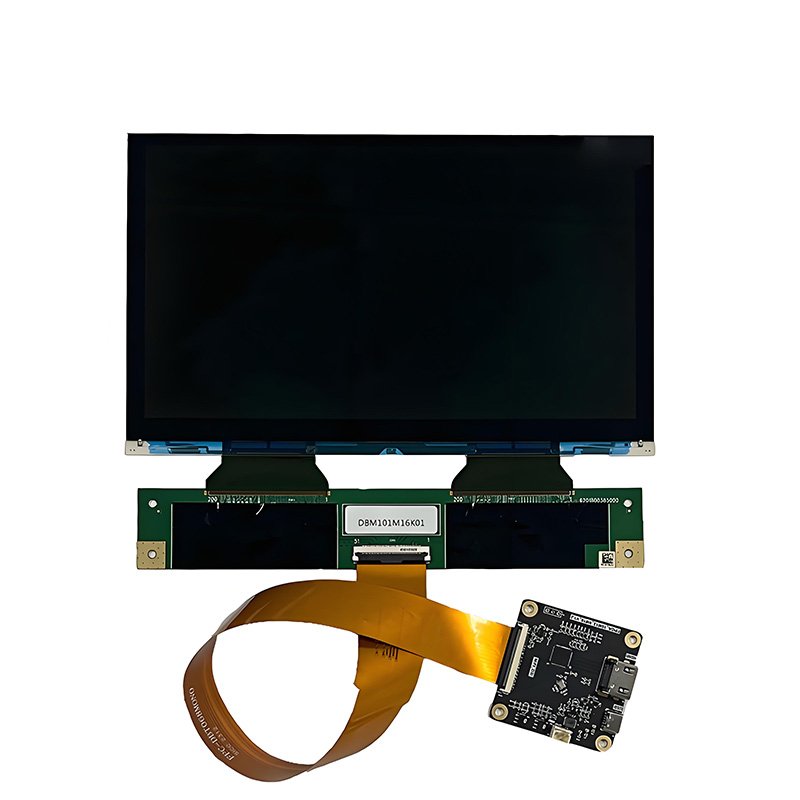
10.1 inch 16K mono LCD Drives New Trends in Resin 3D Printing
The Rapid Evolution of Resin 3D Printing Displays
Over the past decade, resin-based 3D printing technologies such as LCD, DLP, and SLA have transformed from niche prototyping tools into mainstream manufacturing solutions. Industries ranging from dental laboratories to consumer electronics now rely on resin printers to produce parts with extremely fine details and smooth surfaces.
One of the most critical components driving this evolution is the display panel used to control UV light exposure. As printing accuracy requirements increase, display manufacturers are racing to produce higher-resolution panels capable of supporting larger build areas while maintaining microscopic precision.
The 10.1 inch 16K mono LCD represents one of the latest developments in this rapidly evolving display technology. With an ultra-high resolution of 15120×6230 pixels and a large screen size designed for next-generation printers, this type of panel highlights how the industry is moving toward both higher precision and larger printing volumes at the same time.
As resin 3D printing enters a new stage of industrial adoption, display technologies like this are becoming a focal point of discussion among printer manufacturers, engineers, and researchers worldwide.
Why Display Technology Matters in Resin Printing
Unlike filament-based printers, LCD resin printers rely heavily on optical accuracy. Every layer of a printed object is formed when UV light passes through a patterned display panel and cures liquid photopolymer resin.
Because the LCD acts as a dynamic mask, its performance directly affects:
- XY resolution and detail reproduction
- Print speed and exposure efficiency
- Long-term durability of the printer
- Energy consumption and thermal stability
Higher-resolution displays allow printers to reproduce intricate structures such as micro-text, lattice geometries, and complex organic surfaces. This is especially important for applications like dental aligners, jewelry casting models, and engineering prototypes.
Recent developments in mono LCD technology have dramatically improved the performance of resin printers compared with earlier RGB LCD designs.
The Shift From RGB to Mono LCD Technology
In early LCD-based resin printers, RGB panels were widely used because they were originally designed for consumer electronics displays. However, RGB panels include color filters that significantly reduce the amount of UV light that can pass through the screen.
Mono LCD panels eliminate these filters, allowing far more UV light to reach the resin surface. This improvement provides several advantages:
- Faster exposure times
- Higher UV transmission efficiency
- Longer display lifespan
- Reduced heat generation
Because of these benefits, mono LCD panels have rapidly become the industry standard for modern resin printers.
Large high-resolution displays such as the 10.1 inch 16K mono LCD further extend these advantages by providing both speed and large-format capability, allowing manufacturers to print larger batches or bigger components without sacrificing fine detail.
High Resolution: The Rise of 16K Printing
Resolution has become one of the most discussed topics within the resin printing community. Early desktop printers typically featured 2K or 4K displays, which were sufficient for hobbyist applications but limited for industrial workflows.
In recent years, manufacturers have pushed display technology toward:
- 6K resolution panels
- 8K industrial screens
- 12K large-format displays
- emerging 16K LCD panels
A 16K panel dramatically increases the number of pixels available for forming each layer of a print. When combined with a 10-inch-class display size, this creates extremely small pixel sizes that enable highly detailed prints across large build platforms.
For professionals working in fields such as miniature model production, dental manufacturing, and precision prototyping, these improvements significantly reduce the gap between desktop resin printers and high-end industrial SLA systems.
Large-Format Printing Without Losing Precision
Another important trend in the resin printing industry is the growing demand for larger build volumes.
Historically, larger printers often meant lower resolution because the pixel density of the screen had to be spread across a bigger area. However, high-resolution panels such as 16K displays are changing this balance.
A large-format screen like the one used in the
10.1 inch 16K mono LCD screen
demonstrates how manufacturers are solving this challenge by combining high pixel counts with wider display sizes.
This enables printers to produce multiple parts simultaneously or create larger models while maintaining fine detail resolution.
As a result, industries that previously relied on multiple smaller prints can now consolidate production into fewer build cycles, improving productivity.
Expanding Applications for High-Resolution LCD Panels
The growing capabilities of mono LCD technology are opening new opportunities across several industries.
Dental and Medical Manufacturing
Dental laboratories were among the earliest adopters of LCD resin printing because of its ability to produce highly detailed models. With the introduction of ultra-high-resolution displays, dental technicians can now produce more precise orthodontic models and surgical guides with improved surface quality.
Jewelry and Artistic Design
Jewelry casting requires extremely fine details, often at the scale of tens of microns. High-resolution mono LCD screens help capture delicate patterns, engraving details, and intricate structures used in custom jewelry production.
Engineering Prototyping
Engineers increasingly rely on resin printers to test small mechanical parts and prototypes. Higher resolution screens allow designers to evaluate complex geometries and fit-testing components with better dimensional accuracy.
Consumer Miniatures and Collectibles
The gaming and hobby industry has also been a major driver of high-resolution LCD adoption. Collectors and creators printing figurines, miniatures, and tabletop models benefit greatly from improved surface smoothness and sharper details.
Hardware Interfaces and Integration Considerations
While resolution is important, display integration is equally critical for printer manufacturers.
Modern LCD panels often use high-speed interfaces such as MIPI connections to handle the massive data bandwidth required for ultra-high-resolution displays. These interfaces allow printers to refresh images quickly and maintain stable communication between the control board and the display.
The 10.1 inch 16K mono LCD, for example, uses a 51-pin MIPI interface designed to support large data transfers while maintaining signal stability during long print jobs.
Such features are essential for ensuring consistent performance in professional or industrial environments where printers may run continuously for extended periods.
Industry Outlook: Where LCD Resin Printing Is Heading
The rapid adoption of mono LCD technology suggests that the next generation of resin printers will focus on three key areas:
1. Higher Resolution Displays
16K panels are only the beginning. As manufacturing techniques improve, even higher pixel densities may become possible.
2. Larger Printing Platforms
Manufacturers are seeking ways to increase build volume while preserving precision, making large high-resolution displays increasingly valuable.
3. Smarter Printer Software
Advanced slicing software, AI-based exposure optimization, and automated calibration systems will further enhance the performance of high-resolution displays.
These developments will likely make resin printing more efficient, reliable, and accessible to both professionals and advanced hobbyists.
Conclusion
The resin 3D printing industry continues to evolve rapidly as hardware technology improves. Among the most significant developments is the rise of ultra-high-resolution mono LCD panels that enable printers to achieve unprecedented levels of detail.
The 10.1 inch 16K mono LCD exemplifies how display technology is pushing the boundaries of what desktop and industrial resin printers can accomplish. By combining extremely high resolution with a large display format and modern interface technology, panels like this are helping shape the future of high-precision additive manufacturing.
As industries increasingly adopt resin printing for production workflows, innovations in display technology will remain one of the most important drivers of performance and reliability in next-generation machines.