

16-inch 8K Mono LCD Improves Detail in Resin 3D Printers

Introduction: High-Resolution Displays Driving 3D Printing Innovation
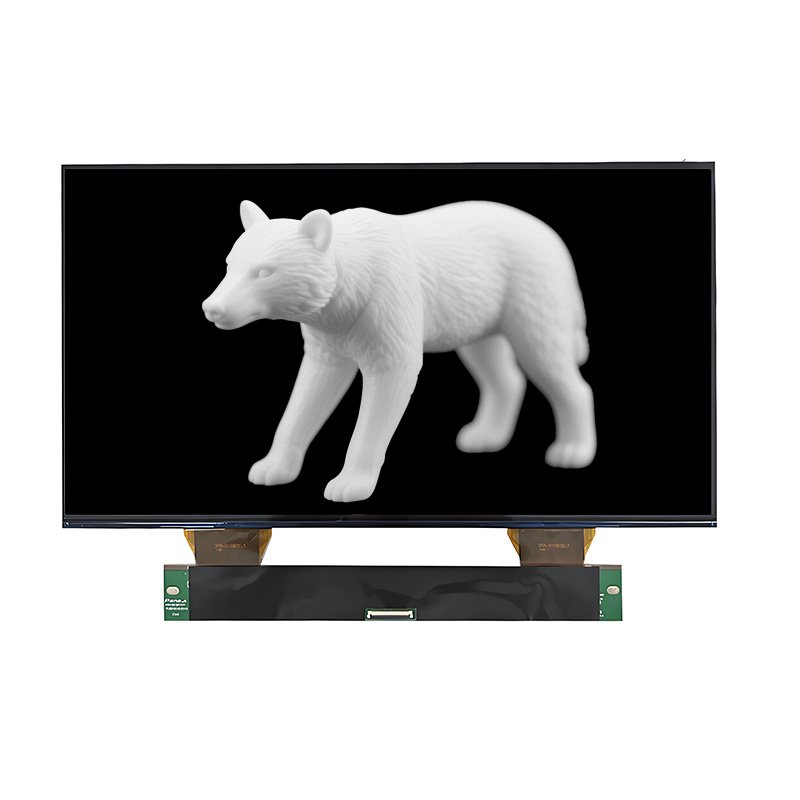
The landscape of resin-based 3D printing is continually evolving, driven by the need for higher precision, greater efficiency, and enhanced model detail. Among the latest advancements, the 16-inch 8K mono LCD has emerged as a technology capable of significantly improving print accuracy and surface finish.
By offering ultra-high pixel density combined with a large display area, these monochrome LCDs allow resin printers to produce intricate models with consistent quality. Unlike traditional RGB panels, the monochrome 8K LCD provides faster layer curing, more uniform light distribution, and finer detail reproduction, making it a pivotal component for professional-grade additive manufacturing.
Learn more about the 16-inch 8K mono LCD and its role in modern 3D printing workflows.
Technical Advantages of 16-inch 8K Mono LCD
The 16-inch 8K mono LCD brings several notable technical benefits to resin-based 3D printing:
- Ultra-Fine Pixel Resolution: With 7680×4320 pixels, the panel ensures accurate replication of micro-details and complex geometries.
- Monochrome Efficiency: More UV light passes through the panel compared to standard RGB displays, reducing curing time per layer.
- Consistent Brightness Across the Screen: Wide viewing angles prevent exposure inconsistencies, reducing layer defects.
- Large Build Area: Supports bigger models without compromising resolution, expanding design possibilities.
These technical advantages translate into higher-quality prints, fewer failed attempts, and more intricate designs, benefiting both professional and advanced hobbyist users.
Influence on 3D Printing Workflow
Adopting a 16-inch 8K mono LCD can transform a 3D printing workflow in multiple ways:
- Faster Prototyping: Reduced layer curing time accelerates prototype iteration.
- Improved Accuracy: Micro-features and fine details are faithfully reproduced.
- Surface Finish Enhancement: Consistent exposure results in smoother prints with less post-processing.
- Scalable Production: Larger panels allow multiple smaller objects to be printed simultaneously without loss of detail.
Explore applications of 16-inch 8K mono LCD in 3D printing for professional additive manufacturing.
Emerging Industry Trends
The 3D printing sector is increasingly adopting high-resolution monochrome LCDs, driven by the following trends:
- Larger Monochrome Displays: Supporting higher build volumes while maintaining ultra-fine detail.
- Optimized Layer Exposure: Integration with advanced slicing software for better print fidelity.
- Higher Throughput Printing: Faster curing allows more prints per day without sacrificing quality.
- Professional Adoption: High-end desktop and industrial printers are adopting 16-inch 8K panels as a standard for precision applications.
Industry analysts note that these trends indicate a shift toward more reliable, higher-resolution 3D printing workflows across both hobbyist and professional markets.
Expert Insights on High-Resolution Displays
Reports from professionals and researchers indicate that 16-inch 8K mono LCDs enhance printing outcomes in several key areas:
- Layer Consistency: Uniform exposure reduces defects caused by uneven curing.
- Surface Quality: Finer resolution improves finish, reducing the need for sanding or polishing.
- Complex Design Capabilities: Supports intricate geometries and microstructures that were difficult to achieve with smaller or lower-resolution panels.
- Workflow Efficiency: Reliable performance across multiple prints reduces wasted material and production time.
These observations confirm that high-resolution monochrome displays are becoming essential for next-generation 3D printing.
Future Outlook
The adoption of 16-inch 8K mono LCDs is expected to continue growing, offering several future benefits:
- Integration with AI and Smart Slicing Tools: Optimized exposure patterns and faster processing for complex models.
- Expansion to Larger Printers: Potential for even bigger panels without compromising detail.
- Standardization Across High-End Printers: Becoming the preferred choice for professional and industrial resin printers.
- Increased Productivity: Faster layer curing and larger build area will streamline additive manufacturing processes.
These advancements signal that 16-inch 8K mono LCD technology is not just a component, but a driving force for innovation in 3D printing.
Check the latest developments in 16-inch 8K mono LCD to stay informed on trends in high-resolution 3D printing displays.
Conclusion
The 16-inch 8K mono LCD represents a major step forward in resin-based 3D printing. Its combination of ultra-high resolution, precise layer control, and a large printable area ensures higher accuracy, better surface quality, and more complex designs.
As the additive manufacturing industry continues to evolve, high-resolution monochrome displays are expected to set new benchmarks for efficiency, reliability, and innovation, supporting both advanced hobbyists and professional applications.