

16 inch 8K Mono LCD Paves the Way for High-Resolution 3D Printing Displays

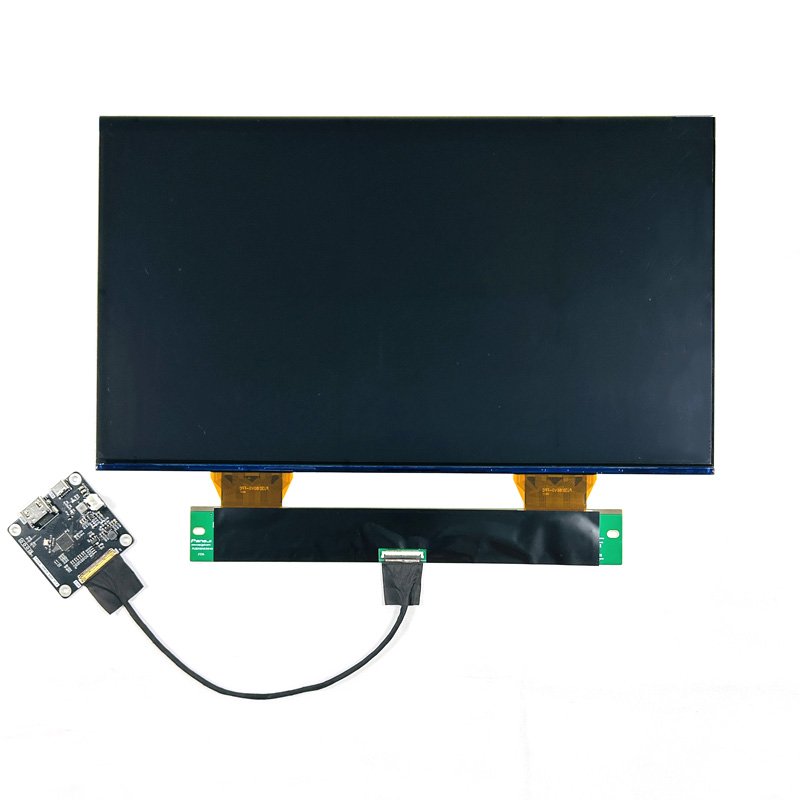
The landscape of 3D printing has evolved significantly in the past decade, with advancements in materials, hardware, and software reshaping what is possible in additive manufacturing. Among the latest technological developments, the 16-inch 8K mono LCD has emerged as a pivotal component for high-precision resin-based 3D printers. As additive manufacturing increasingly demands greater accuracy, layer-by-layer consistency, and faster print speeds, the role of high-resolution displays in these systems has grown more critical than ever.
Recent industry analyses indicate that monochrome LCD technology has been adopted widely for professional and advanced desktop 3D printers. The combination of a 16-inch screen size with 8K resolution (7680×4320 pixels) provides a substantial increase in pixel density compared to standard LCDs used in previous generations of 3D printers. This heightened pixel density allows for extremely fine control of each layer during the photopolymer curing process, directly translating to improved surface detail, dimensional accuracy, and structural integrity in printed models.
Learn more about the 16-inch 8K mono LCD to see how it is influencing additive manufacturing workflows.
Technical Significance of 8K Monochrome Displays in 3D Printing
Monochrome LCDs differ from traditional RGB panels primarily in the way they transmit light for curing photopolymer resins. By removing the color filter layer, monochrome panels allow significantly more light to pass through, reducing curing times per layer. When combined with the 16-inch 8K format, this results in both faster printing and higher fidelity. Layer exposure is more uniform, minimizing defects such as undercured or overcured regions, which are common challenges in resin 3D printing.
The increased resolution also has a profound effect on model detail. In resin printing, each pixel corresponds to a tiny square in the printed layer. More pixels per inch mean that curves, edges, and microfeatures are represented more precisely, reducing the need for post-processing and improving the overall quality of prints. Industry professionals have reported that models printed on 8K monochrome displays show noticeably smoother surfaces and better-defined intricate details compared to 4K displays of the same size.
In addition, the large 16-inch display area allows for printing larger objects or multiple smaller models simultaneously without sacrificing resolution. This scalability is particularly valuable for prototyping environments, where designers may need to produce multiple iterations quickly, and for small-scale production runs in professional or hobbyist contexts.
Explore detailed specifications of the 16-inch 8K mono LCD to understand how its pixel density and screen size contribute to enhanced 3D printing outcomes.
Trends and Adoption in the 3D Printing Industry
The adoption of high-resolution monochrome LCDs, such as the 16-inch 8K panel, is part of a broader trend in the 3D printing sector toward greater precision and efficiency. Analysts observe several emerging patterns:
- Transition to Larger Monochrome Displays: Desktop 3D printers are increasingly featuring screens larger than 10 inches, allowing for bigger build volumes while maintaining ultra-fine resolution. The 16-inch format represents the upper end of this trend for desktop and semi-professional machines.
- Faster Printing Speeds with Consistent Accuracy: Because monochrome LCDs allow higher light transmission, layer curing times are reduced, which in turn decreases overall print duration. Faster prints without loss of detail are a key factor driving adoption in both hobbyist and commercial markets.
- Greater Integration in Professional 3D Printing Solutions: While previously restricted to high-end professional machines, 16-inch 8K mono LCDs are now being integrated into more widely available printers, expanding the accessibility of high-resolution additive manufacturing.
- Software Optimization for 8K Layers: Slicing software and printer firmware are being updated to fully leverage the high resolution and large format of these displays. Features like anti-aliasing, layer thickness optimization, and grayscale exposure control are designed specifically for 8K monochrome panels.
These trends underscore the growing importance of display technology in 3D printing, as hardware improvements alone cannot achieve higher print fidelity without corresponding advances in the visual output used for layer exposure.
Expert Observations and Community Feedback
Discussions within the 3D printing community, including forums, technical publications, and industry conferences, suggest that the 16-inch 8K mono LCD is having a measurable impact on print quality. Users report several notable benefits:
- Surface Quality: Prints exhibit smoother surfaces, reducing the need for post-processing and sanding. This is particularly advantageous for intricate models such as miniatures, jewelry prototypes, and dental applications.
- Precision in Fine Features: Extremely small details, such as thin walls or intricate textures, are faithfully reproduced without pixelation, thanks to the ultra-high pixel density.
- Layer Consistency: Across large builds, exposure uniformity is maintained, minimizing defects such as uneven curing or layer misalignment.
Industry analysts suggest that as monochrome 8K displays become more widespread, these improvements will set new quality benchmarks for desktop and professional 3D printers alike. Moreover, hobbyists and small manufacturers now have access to capabilities that were previously limited to industrial-grade systems.
Potential Challenges and Considerations
While the benefits of 16-inch 8K mono LCDs are substantial, experts caution that integration into printers requires careful consideration:
- Data Processing Requirements: Higher resolution layers generate more data, which demands faster processing hardware and optimized slicing algorithms to prevent slowdowns or errors.
- Material Compatibility: The properties of resins, including sensitivity to specific wavelengths and curing speeds, must be matched with the exposure characteristics of 8K monochrome panels.
- Cost-Benefit Balance: Larger 8K panels are more expensive than standard LCDs. Manufacturers and users must evaluate whether the benefits in print fidelity and speed justify the investment for their specific applications.
Despite these considerations, industry sentiment remains positive, as the technical advantages of ultra-high-resolution monochrome LCDs outweigh the challenges in most professional and enthusiast contexts.
Stay updated on 16-inch 8K mono LCD applications in 3D printing to follow emerging trends and technical developments.
Future Outlook for 3D Printing Displays
The trajectory of 3D printing technology suggests that display innovation will continue to play a critical role in enhancing print quality and efficiency. As manufacturers aim to produce larger, more intricate models with higher throughput, the integration of 16-inch 8K mono LCDs may become a standard feature for premium and mid-range printers.
Analysts forecast continued improvements in display longevity, brightness uniformity, and software compatibility. Additionally, with increasing community knowledge and technical support for 8K monochrome panels, the technology is expected to see broader adoption and accelerated innovation in slicing algorithms and printer firmware.
The convergence of ultra-high-resolution displays and optimized resin chemistry will likely define the next generation of additive manufacturing, enabling designs and models that were previously difficult or impossible to produce reliably at a small scale.
Conclusion
In summary, the 16-inch 8K mono LCD represents a significant evolution in 3D printing display technology. By combining ultra-high resolution, monochrome precision, and a large-format screen, these displays enable superior print accuracy, finer surface finishes, and increased production efficiency. Industry experts and user communities agree that such advancements are transforming what is achievable with resin-based 3D printing, setting new standards for both professional and advanced desktop applications.
The ongoing adoption of 16-inch 8K mono LCDs underscores the critical role of display technology in additive manufacturing, highlighting a trend where precision, efficiency, and visual fidelity are increasingly intertwined. As these displays become more prevalent, the future of 3D printing looks sharper, faster, and more precise than ever before.