

How does a UV light system works in a 3D printer?

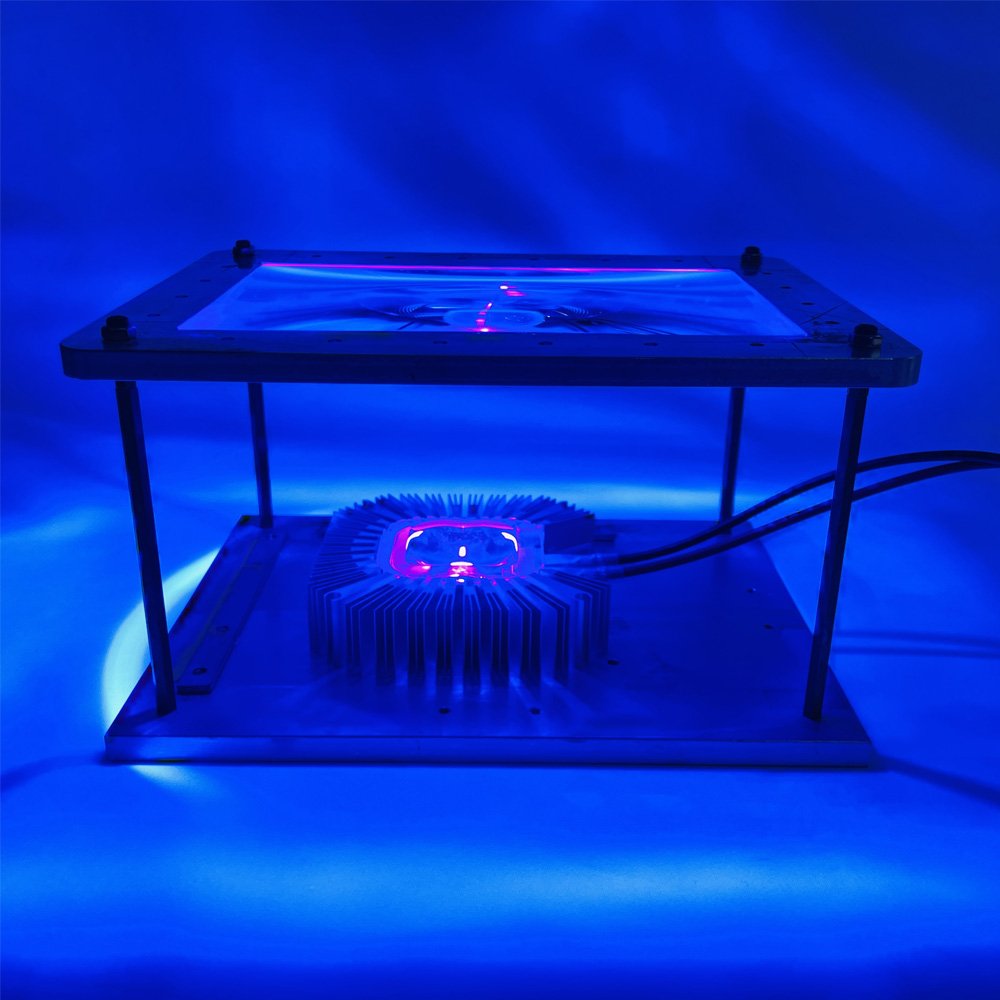
How a UV Light System Works in a 3D Printer: Understanding the Technology Behind High-Precision Resin Printing
Resin-based 3D printing has become one of the most widely used technologies for creating highly detailed prototypes and functional components. The ability to transform liquid resin into solid material with fine precision relies on a critical part of the printing process—the UV light system. This system provides the energy required to cure resin accurately, consistently, and efficiently.
This article explains how a UV light system works inside a 3D printer, describes its essential components, outlines key performance parameters based on UV modules from Duobond’s UV Light System product line, and highlights why a high-quality UV curing system is essential for modern resin 3D printing.
☀️ The Role of UV Light in Resin 3D Printing
Resin 3D printing is powered by photopolymerization, a process in which UV light triggers the transformation of liquid resin into a solid state. When resin is exposed to specific wavelengths—most commonly 405 nm—its photoinitiators activate and begin a chain reaction that links polymer chains together.
The UV light system is the source that provides this energy. The consistency of the exposure, the strength of the light, and the uniformity across the build area all determine the final print’s level of detail, layer adhesion, and dimensional accuracy. Without a stable UV system, prints may warp, cure unevenly, or fail entirely.
As a result, the UV light module functions as the core curing engine within a resin 3D printer.
🔧 Core Components of a UV Light System
A high-performance UV light system contains several coordinated elements working together to deliver consistent energy to the resin.
UV LED Array
The LED array provides the main UV output. Most modern systems—including those in the Duobond product range—use compact or high-density arrays of 405 nm UV LEDs. These LEDs are selected for their compatibility with mainstream photopolymer resins and their ability to deliver strong, stable illumination.
Optical Lens or Reflector Structure
Optical components ensure the UV light is evenly distributed across the entire exposure area. Lenses, diffusers, and reflector plates help achieve high uniformity, which is essential when using large LCD masking screens in resin printers.
Thermal Management
UV LEDs generate heat during operation. Duobond systems include air-cooled and water-cooled designs to maintain stable operating temperatures. Effective cooling prevents brightness loss, color shift, and premature LED aging.
Driver and Electrical Control
The driver controls the LED current and ensures stable output over time. Reliable driver circuitry minimizes fluctuations that can impact curing consistency.
Mechanical and Optical Housing
The UV system must be positioned accurately inside the printer. Mechanical housings support optical alignment and protect the LED array while providing enough rigidity for long-term operation.
Each of these components affects curing quality, making them equally important to the overall performance of the printer.
🖨️ How the UV Light System Operates During Printing
During a print job, the UV light system works continuously to cure one layer after another. The process begins when the build platform lowers into the resin vat, leaving a thin layer of liquid resin ready for exposure.
Once the printer identifies the area of the layer that needs to be cured, the UV light system activates. In LCD printers, the LED array shines upward through a monochrome LCD screen. Only the pixels that correspond to the pattern of the current layer allow light to pass through, forming the exact cross-section that will be cured.
The UV light then initiates polymerization. The correct intensity ensures the resin cures to the required depth. Uniformity across the exposure zone prevents areas of over-cure or under-cure.
After the exposure completes, the build platform rises, allowing uncured resin to refill the gap. The cycle repeats layer by layer until the full part is formed.
Throughout this workflow, the UV light system operates as a stable, high-consistency curing unit responsible for both print quality and print speed.
📏 Key Technical Parameters of UV Light Systems
UV light module performance depends on several critical specifications. These parameters are commonly found in Duobond UV light systems and influence how well the module supports the resin printing process.
Wavelength
Most systems operate at 405 nm, the industry standard for modern 3D printing resins. Precise wavelength output ensures strong compatibility with photopolymer chemistry.
Power Level and Irradiance
UV modules differ in strength from compact units to high-power configurations used in 8.9-inch, 13.3-inch, and 16-inch printing formats. Higher power allows shorter exposure times, increasing productivity.
Optical Uniformity
Uniformity ensures consistent curing across the entire build area. Duobond modules are designed with optimized LED spacing and diffuser structures to achieve even illumination.
Cooling Method
Both air-cooled and water-cooled options exist.
Air-cooled modules are ideal for desktop printers.
Water-cooled modules support high-power industrial systems that require temperature stability during long curing cycles.
Module Dimensions and Compatibility
UV modules must correspond to LCD or optical panel size. Duobond offers various module dimensions matching standard resin printer panel formats, ensuring proper optical alignment and exposure coverage.
These parameters determine how well the module supports accuracy, layer adhesion, print speed, and long-term stability.
⚙️ Why High-Quality UV Light Systems Matter
A UV light system affects virtually every aspect of the printing result.
High-quality systems help ensure:
Accurate Layer Definition
Uniform UV exposure produces sharper edges, cleaner details, and more reliable geometry.
Strong Layer Bonding
Correct curing depth leads to stronger adhesion between layers and reduces print failures.
Higher Print Speeds
Greater UV intensity enables shorter exposure times, improving printing efficiency.
Smooth Surface Finish
Even light distribution prevents over-cured spots and irregular textures.
Long-Term Stability
Industrial-grade UV modules are built for thousands of hours of consistent performance, making them ideal for both desktop and commercial resin printers.
A dependable UV system ensures that resin printers operate with predictable results and maintain consistent quality over time.
🔬 Best Practices for UV Light System Integration
To achieve optimal results, printer manufacturers and users often follow several foundational practices.
Maintaining proper LED-to-LCD distance is essential for uniform light distribution. Adequate cooling is required to ensure LED longevity and stable brightness. Matching the UV system to the resin formulation helps avoid exposure issues. Regular irradiance checks help maintain curing accuracy. Designing the printer with a modular UV setup also allows easy upgrades or replacements without redesigning the entire system.
These considerations support long-term reliability and help maximize the printer’s performance in high-demand environments.
🚀 Development Trends in UV Light Systems
UV curing technology continues to evolve with new requirements from 3D printing manufacturers.
Recent trends include higher-density LED layouts for stronger curing performance, improved cooling technologies to support long-duration industrial printing, advanced optical structures for ultra-high uniformity, and compatibility with higher-resolution LCD panels such as 6K to 12K displays.
Modularity is also becoming increasingly important, allowing manufacturers to replace or upgrade UV components without altering other printer systems.
📩 Contact Us for UV Light System Support
If you are designing a new resin 3D printer, upgrading an existing machine, or searching for a dependable UV curing solution, we can provide technical recommendations tailored to your requirements.
Our UV light systems offer stable, uniform, and high-efficiency curing for a wide range of resin printing applications. Whether you need compact LCD, large-format water-cooled units, or customized optical structures, we can help you select the right solution for your project.
👉 Contact us today to learn more about UV light modules, request detailed specifications, or discuss integration needs.
We are ready to support your next 3D printing development with reliable, professional UV curing technology.