

Understanding Pixel Size and Resolution in Mono LCD 3D Printers

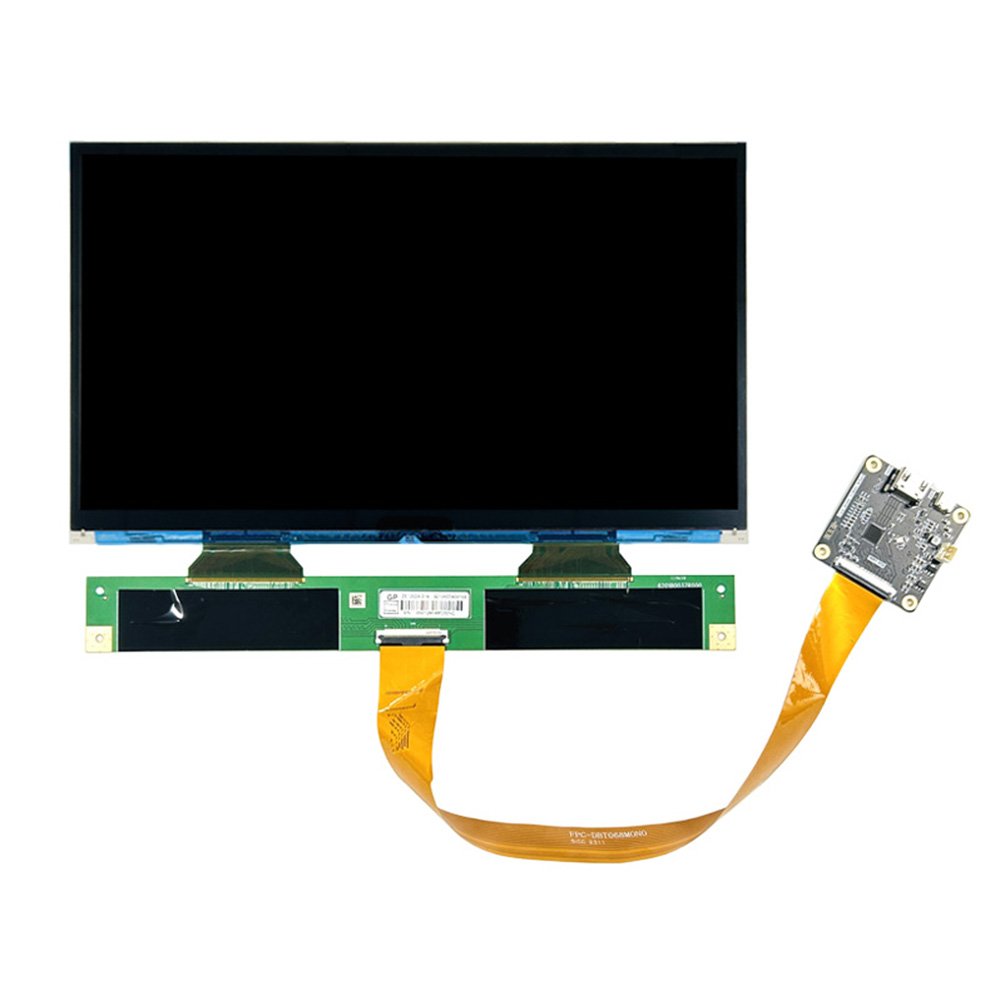
🧠 Understanding Pixel Size and Resolution in Mono LCD 3D Printers
📸 Introduction: Why Resolution Matters in Resin 3D Printing
In resin-based 3D printing, precision defines quality. Every cured layer depends on how accurately the LCD screen projects UV light through the resin. The clarity, smoothness, and dimensional accuracy of each model are determined by one key factor — the pixel size and resolution of the mono LCD screen.
As 3D printing technology evolves, mono LCD screens have become the standard for high-performance resin printers. With faster exposure speed, higher light transmittance, and longer service life, these screens deliver exceptional performance. Now, with 16K mono LCD screens, the industry is entering an era of ultra-fine, industrial-grade precision.
🧩 What Do Pixel Size and Resolution Mean?
Before exploring advanced printing technologies, it’s essential to understand two key concepts:
- Resolution refers to the number of pixels across the screen — for example, 3840×2400 (4K) or 15360×8640 (16K).
- Pixel size is the physical size of each pixel, usually measured in micrometers (μm). Smaller pixels mean finer and smoother printed results.
The relationship is straightforward:
Higher resolution → smaller pixels → higher printing accuracy
For instance, a 7-inch 4K LCD may have a pixel size of around 35μm, while a 16K mono LCD screen of similar size can reach below 15μm. This results in dramatically improved detail, ideal for applications requiring ultra-precise geometry.
⚙️ How Mono LCD Screens Changed the Game
Earlier resin printers relied on RGB LCDs, which used color filters to form images. However, these filters blocked a significant amount of UV light, slowing down curing speed and reducing screen longevity.
Mono LCD screens changed this dynamic completely. By using a UV-optimized single-layer design, they allow more light to pass through, enabling:
- 4–5× faster curing
- 2–3× longer lifespan
- Higher contrast and exposure uniformity
This innovation transformed both consumer and industrial resin 3D printing — providing smoother surfaces, sharper edges, and more consistent curing results.
🔬 The Science Behind Pixel Precision
Every pixel on a mono LCD screen acts as a tiny “window” controlling how UV light hits the resin. The smaller these pixels are, the more detailed and accurate each cured layer becomes.
| LCD Type | Resolution | Pixel Size | Print Detail Level |
|---|---|---|---|
| 2K Mono LCD | 2560×1440 | ~50μm | Entry-level prints |
| 4K Mono LCD | 3840×2400 | ~35μm | Mid-range precision |
| 8K Mono LCD | 7680×4320 | ~22μm | Professional detail |
| 16K Mono LCD | 15360×8640 | <15μm | Ultra-fine detail |
A 16K mono LCD screen can reproduce microscopic detail with incredible accuracy — ideal for jewelry, dental, and miniature manufacturing, where precision directly impacts functionality and finish.
🧱 Applications That Benefit from Higher Resolution
High-resolution mono LCD screens have expanded the boundaries of resin 3D printing. They are now essential in applications where precision, texture, and surface finish matter most:
- Dental and Orthodontic Models – ensuring accurate alignment and smooth surfaces.
- Jewelry and Art Design – capturing fine engravings and intricate patterns.
- Miniature and Architectural Models – replicating minute structural details.
- Engineering Components – improving dimensional stability and product reliability.
- Consumer Electronics Casings – achieving uniform, high-definition surface quality.
The 16K mono LCD screens supplied by Duobond Solutions are specifically engineered for these demanding environments, combining high contrast, excellent UV transmittance, and stable thermal performance.
💡 How Resolution Affects Print Quality and Speed
Higher resolution doesn’t just enhance visual quality — it also influences printing performance. As pixel size decreases, the screen requires more precise and uniform UV exposure to achieve consistent curing.
Key factors that determine print success include:
- Uniform brightness across the entire screen
- High light transmittance for faster exposure
- Thermal stability to prevent heat distortion
Duobond Solutions’ mono LCD screens are engineered for this balance. With light transmittance up to 6%, high contrast ratio, and optimized optical coatings, they ensure smooth and even exposure even at 16K resolution.
⚡ The Rise of 16K Mono LCD Screens
The move from 8K to 16K resolution marks a major step forward for resin printing accuracy.
A 16K mono LCD screen, with 15360×8640 pixels, achieves sub-15μm pixel precision across large panel sizes (13–17 inches). This improvement allows for near-laser-level detail at a fraction of the cost, making it ideal for professional and industrial printers alike.
Key Benefits of 16K Mono LCD Screens:
- Ultra-high pixel density for unmatched print accuracy
- Superior UV transmittance for rapid curing
- Low power consumption and efficient heat control
- Long operational life, exceeding 2000 hours of continuous use
For 3D printer manufacturers, upgrading to 16K mono LCD screens means faster print cycles, improved consistency, and lower maintenance costs — all while achieving exceptional surface detail.
🧠 The Future: Beyond Resolution
While 16K screens represent the current pinnacle of resolution, the next phase of innovation in resin 3D printing will focus on material optimization, light uniformity, and contrast control.
Future mono LCD screens are expected to feature:
- UV-resistant glass layers for enhanced longevity
- Improved LC materials for faster light response
- Advanced optical bonding for maximum brightness and durability
Duobond Solutions continues to develop next-generation mono LCD screens designed to meet the future needs of 3D printer manufacturers — combining efficiency, stability, and precision in one advanced display solution.
📞 Partner with Duobond Solutions
At Duobond Solutions, we focus on providing high-resolution mono LCD screens for professional resin 3D printers. Our advanced 16K LCD screens deliver exceptional light uniformity, accuracy, and reliability, making them ideal for high-end 3D printing applications.
Whether you’re designing a new printer model or upgrading your existing product line, our team can provide customized LCD screen solutions tailored to your optical and technical requirements.
👉 Contact Duobond Solutions today to learn how our 16K mono LCD screens can enhance your next-generation 3D printer.
Or get in touch via our Contact Page — our experts are ready to provide specifications, samples, and integration support.