

Technical Guide: Choosing Mono LCD for 3D Printing

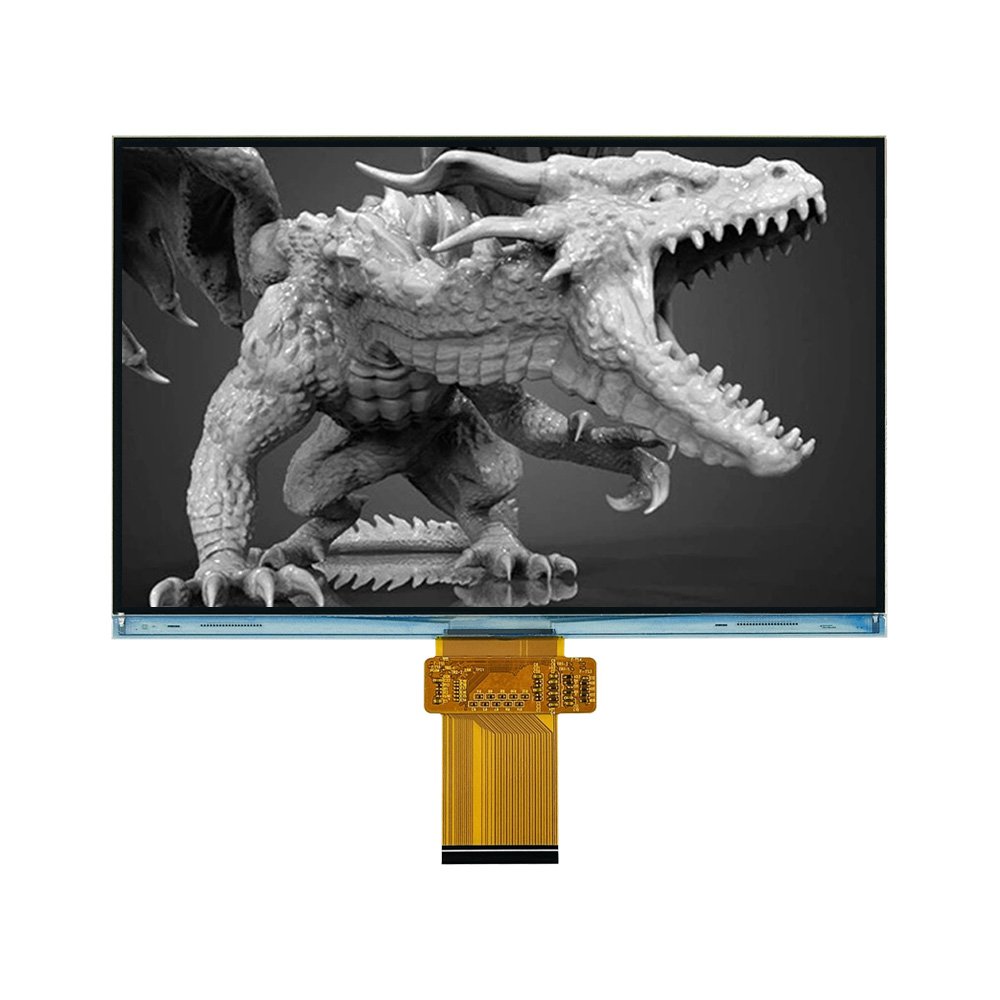
🖥️ Technical Guide: What to Look For in a Mono LCD for Resin 3D Printing
Introduction: The Role of Mono LCDs in Modern Resin 3D Printing
Resin 3D printing, particularly MSLA (Masked Stereolithography) and LCD-based technologies, has transformed from hobbyist experimentation to professional-grade production in recent years. At the heart of these machines lies the mono LCD, a critical component that directly impacts print speed, resolution, reliability, and overall cost-efficiency.
Unlike traditional RGB LCD screens, mono LCDs lack color filters, allowing significantly higher UV light transmittance. This translates into faster layer curing, longer screen lifetimes, and superior overall print quality. For manufacturers and developers, choosing the right mono LCD is a vital decision that can determine the success of a resin 3D printer design.
Duobond Solutions, a leading supplier of LCD solutions, offers a comprehensive range of high-performance mono LCDs tailored for 3D printing applications. This guide explores the key factors to consider when selecting a mono LCD, providing insights for both OEMs and advanced hobbyists.
🔹 Resolution and Pixel Density: Achieving Fine Detail
The resolution of the mono LCD directly affects the XY accuracy and level of detail that can be achieved in prints. Mono LCDs typically range from 2K (2560×1440) to 16K (up to 3840×2400 or higher in industrial panels).
Pixel pitch is a critical factor: smaller pixels allow finer details, sharper edges, and more accurate features, which is essential for jewelry, dental models, and other precision applications. Screen size is also important: larger build areas require larger panels, but increased size can compromise uniformity if not properly engineered. Duobond Solutions offers modules ranging from compact 4- to 15.6-inch solutions to support both desktop and industrial-sized printers.
Additionally, grayscale bit depth (e.g., 8-bit or 10-bit) influences how accurately UV exposure can be controlled for precise layer curing. By selecting the appropriate resolution and pixel pitch, manufacturers can ensure consistently high-quality prints and avoid common defects such as layer lines or incomplete curing.
💡 Light Transmittance and Exposure Efficiency
One of the primary advantages of mono LCDs is their superior UV light transmittance. Without the color filters present in RGB LCDs, mono LCDs allow more UV light to pass through, reducing exposure times and accelerating print speed.
Higher transmittance directly reduces layer curing time, while uniformity across the screen ensures consistent curing for every layer. Uneven light can lead to defects or weaker prints. Compatibility with UV LED wavelengths, typically 405nm, ensures optimal resin curing and energy efficiency.
Duobond Solutions’ mono LCDs are engineered for high transmittance and uniformity, minimizing print failures and optimizing throughput for both small-scale and industrial applications.
🛡️ Screen Lifetime and Durability
Screen longevity is another crucial factor, as it directly affects maintenance costs and printer downtime. Mono LCDs typically offer 2,000+ hours of use, significantly longer than RGB LCD alternatives, which may only last 200–700 hours.
Effective thermal management is essential because continuous UV exposure generates heat that can reduce the panel’s lifespan. Quality panels integrate heat sinks and temperature-resistant materials to mitigate this effect. Additionally, large-area panels require structural reinforcement to prevent bending or warping that could distort prints. Choosing a high-quality mono LCD with long-term reliability ensures lower total cost of ownership, especially for commercial and industrial printer applications.
⚡ Refresh Rate and Print Speed
The refresh rate of a mono LCD determines how quickly a layer image can be projected, which impacts overall print speed. High-speed printing is important for professional applications where time-to-market and batch production efficiency are critical.
Panels with higher refresh rates, typically 60–120Hz, enable faster exposure cycles, reducing per-layer time. It is also important to ensure compatibility with the printer’s controller board and slicing software for accurate layer synchronization. Designers should consider thermal and power constraints as higher refresh rates can increase energy consumption and heat generation. Duobond Solutions’ mono LCDs are optimized for high-speed MSLA printing, providing stable refresh rates that support rapid layer transitions without sacrificing print quality.
🔌 Interface and Controller Compatibility
Selecting a mono LCD also requires careful attention to electrical interfaces and controller compatibility. Mismatched interfaces can cause integration problems or reduce performance.
Connector types vary, including 40-pin FPC, eDP, and MIPI. Voltage and power requirements must be met to ensure consistent brightness and longevity. Some panels require external driver boards for UV backlight control and grayscale management. Duobond Solutions provides compatible driver boards and accessories to simplify integration, helping manufacturers avoid delays in printer development while maintaining consistent performance.
🎨 Customization and OEM Considerations
Many 3D printer manufacturers benefit from customized mono LCD solutions. Customization can include specific screen sizes, backlight intensity, connector layouts, and optical coatings.
Duobond Solutions offers tailored services including custom screen design, UV backlight calibration for specific resin types, grayscale calibration for precision applications, and rapid prototyping for evaluation. These capabilities ensure that manufacturers can optimize performance, reduce failure rates, and gain a competitive advantage in the evolving 3D printing market.
🔮 Future Trends in Mono LCD for 3D Printing
Looking ahead, mono LCDs are expected to continue advancing in resolution and size. Emerging trends include higher-resolution panels (8K, 10K, 16K) for ultra-precision applications, larger build areas for industrial-scale production, improved thermal and UV management for durability, and better integration with new resin formulations. Staying informed about these developments allows OEMs to plan future printer designs that leverage the latest mono LCD technology.
✅ Conclusion: Partnering with Duobond Solutions for Reliable Mono LCDs
Selecting the right mono LCD requires careful evaluation of resolution, transmittance, lifetime, speed, interface compatibility, and customization options. Each factor influences print quality, operational efficiency, and overall cost.
Duobond Solutions has been delivering high-quality LCD solutions since 2007, supporting a wide range of 3D printer applications from desktop hobby machines to professional industrial systems. Our panels are engineered for performance, longevity, and seamless integration, with customization options to meet specific OEM requirements.
If you are developing a resin 3D printer and want to optimize your system with a reliable mono LCD, contact Duobond Solutions today. Our technical team can help you select the right panel, provide samples, and offer ongoing support to ensure your printer achieves the best possible performance.
👉 Request a quote or sample
📧 Or email us directly:info@duobond-display.com
Click here for the complete product catalog