

Mono LCD Display Technology Driving 8K 3D Printer Displays Forward

Introduction: Why Mono LCD Display Matters in High-Resolution Imaging
In recent years, the evolution of display technology has played a critical role in advancing precision equipment, particularly in additive manufacturing. Among these innovations, mono LCD display technology has emerged as a core component in high-resolution optical systems. Its importance is especially evident in applications such as SLA and MSLA printing, where pixel-level accuracy directly affects output quality.
As demand grows for finer details, smoother surfaces, and faster curing cycles, manufacturers are increasingly adopting ultra-high-resolution solutions such as the 8k LCD screen. When combined with a mono LCD architecture, these displays enable a new generation of 3D printer display systems designed for professional and industrial use.
Understanding Mono LCD Display Technology
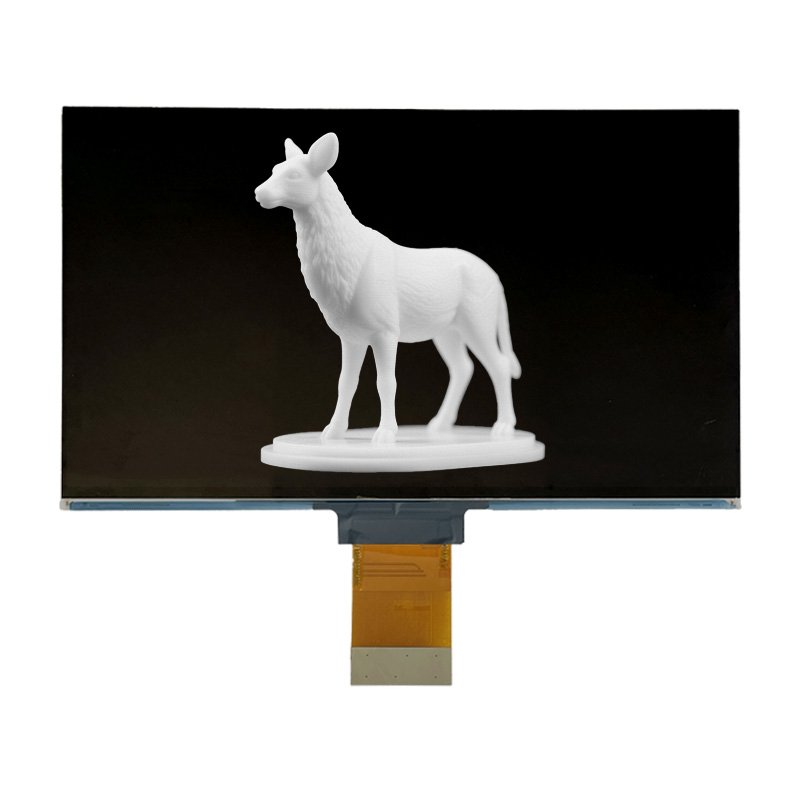
A mono LCD display differs fundamentally from traditional RGB LCD panels. Instead of using red, green, and blue subpixels, a mono panel allows light to pass through a single-channel pixel structure. This design delivers several technical advantages:
- Higher light transmittance
- Faster exposure times
- Improved UV efficiency
- Longer panel lifespan
For resin-based 3D printing, these characteristics are not optional—they are essential. The mono LCD display acts as a precision optical mask, controlling UV exposure at the pixel level. Any inconsistency in pixel definition or transmittance can result in dimensional inaccuracies or surface defects.
The Role of 8K LCD Screen Resolution in 3D Printing
Resolution has become one of the most discussed parameters in 3D printer displays. An 8k LCD screen, typically defined as 7680 × 4320 pixels, dramatically increases pixel density within a given panel size. For a 10.3-inch display, this translates into extremely small pixel pitches, enabling:
- Sharper edge definition
- Reduced layer aliasing
- Improved surface smoothness
- Enhanced micro-detail reproduction
In high-precision industries such as dental modeling, jewelry prototyping, and micro-mechanical components, these improvements directly impact product usability. The combination of mono LCD display architecture with an 8K LCD screen allows printers to achieve both speed and accuracy without compromise.
Optical Performance and Light Uniformity
Beyond resolution, optical performance is a defining factor in any professional 3D printer display. Mono LCD displays are optimized for UV wavelengths, ensuring consistent exposure across the entire panel. When paired with advanced backlight systems and precise diffusion layers, the result is uniform curing and predictable print outcomes.
An 8k LCD screen amplifies these benefits by reducing pixel diffusion and minimizing light leakage between adjacent pixels. This is particularly important in large-format builds, where uniformity across the build plate is critical for repeatable results.
System Integration: Interfaces and Signal Transmission
High-resolution mono LCD display panels require robust signal interfaces to handle massive data throughput. Modern 8K 3D printer displays commonly rely on high-speed interfaces such as MIPI DSI, which offer:
- High bandwidth for ultra-high resolution
- Reduced electromagnetic interference
- Compact connector design
- Efficient power consumption
A well-integrated signal architecture ensures stable image rendering, synchronized exposure timing, and long-term operational reliability. These factors are often overlooked but play a vital role in real-world printing environments.
Thermal Stability and Long-Term Reliability
As resolution increases, so does power density. Managing heat becomes essential to maintain image stability and extend panel lifespan. Mono LCD displays are generally more thermally efficient than RGB panels, but high-resolution systems still require optimized thermal design.
In professional 3D printer displays, thermal considerations include:
- Backlight heat dissipation
- Panel operating temperature range
- Long-duration exposure stability
An 8k LCD screen designed for continuous operation must maintain consistent optical performance over thousands of exposure cycles, especially in industrial or batch-production settings.
Application Scenarios for 8K Mono 3D Printer Displays
The adoption of mono LCD display technology with 8K resolution is expanding across multiple industries:
- Dental laboratories requiring ultra-fine margins
- Jewelry manufacturing with complex micro-geometry
- Medical prototyping where accuracy is non-negotiable
- Industrial tooling and precision fixtures
In each of these scenarios, the 3D printer display is no longer a passive component—it is a defining factor in system performance.
Example of a High-Resolution Mono LCD Solution
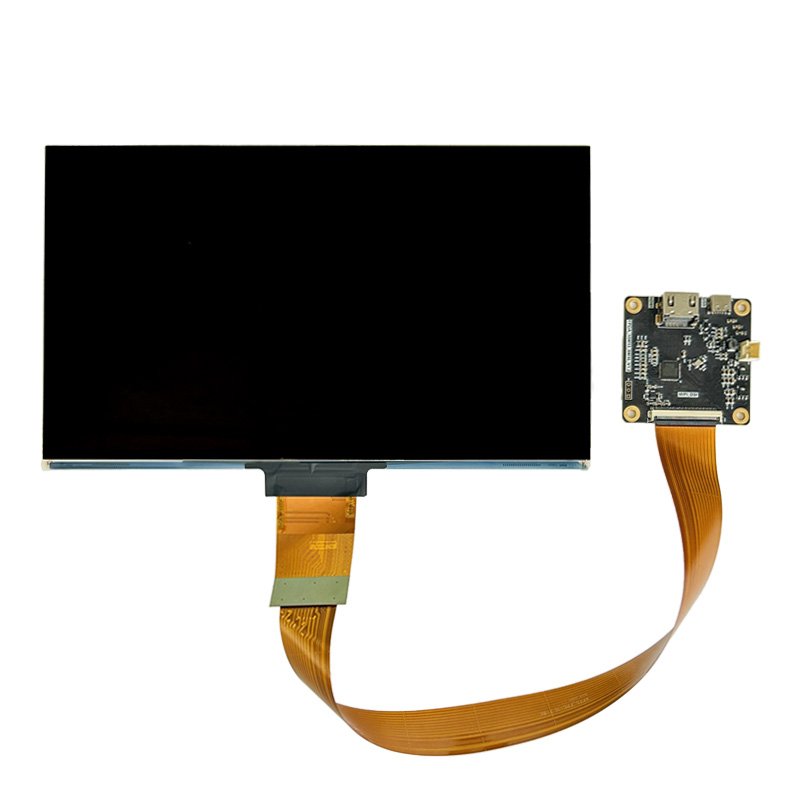
A practical example of this technology can be seen in a 10.3-inch 8K mono LCD display designed for 3D printing applications, which integrates ultra-high resolution with a compact form factor and MIPI interface.
You can find more technical details about this type of mono LCD display for 3D printer display systems here:
👉 10.3-inch 8K mono LCD screen for 3D printer display applications
This kind of solution illustrates how resolution, optical efficiency, and system compatibility come together in modern additive manufacturing equipment.
Future Trends in Mono LCD Display for Additive Manufacturing
Looking ahead, mono LCD display technology is expected to continue evolving alongside higher resolutions and smarter system integration. Potential developments include:
- Even higher pixel densities beyond 8K
- Improved UV efficiency materials
- Enhanced lifetime through optimized polarizers
- Smarter interface integration with next-generation controllers
As these trends converge, the role of the 3D printer display will become increasingly central to overall machine performance.
Conclusion
The rise of mono LCD display technology marks a significant milestone in the evolution of high-precision imaging systems. When combined with an 8k LCD screen, it enables a new class of 3D printer display solutions capable of delivering exceptional detail, speed, and reliability.
For manufacturers and system designers focused on next-generation additive manufacturing, understanding and selecting the right mono LCD display is no longer optional—it is a strategic decision that defines output quality and long-term competitiveness.