

Why Industrial 3D Printers Use 10.1 Inch 16K Mono LCD with Yellow Polarizer

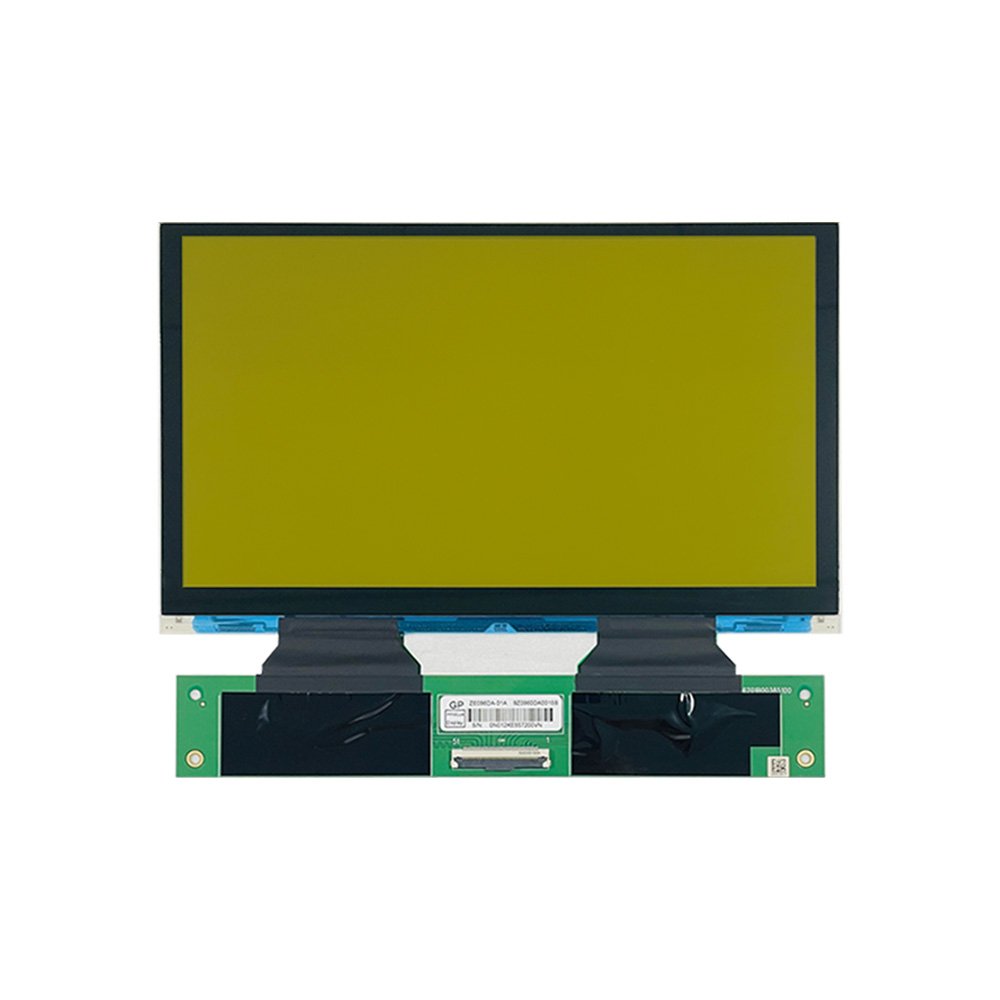
Industrial 3D printers place extremely high demands on display components, as the LCD panel directly determines exposure accuracy, printing precision, and long-term system stability. A 10.1 inch 16K mono LCD with yellow polarizer has become a preferred choice in industrial MSLA and SLA 3D printing systems due to its combination of ultra-high resolution, controlled light transmission, and optical reliability. As industrial additive manufacturing continues to move toward higher precision and larger production volumes, display selection has evolved into a critical engineering decision rather than a simple component choice.
Second Paragraph
Compared with standard monochrome LCD panels, a 10.1 inch 16K mono LCD with yellow polarizer is specifically engineered to support consistent UV exposure and fine pixel-level control in industrial environments. The integration of a yellow polarizer layer enhances contrast performance and reduces unwanted light interference, helping industrial 3D printers maintain dimensional accuracy and repeatable results across long print cycles.
Industrial Display Requirements in Modern 3D Printing
In industrial 3D printing systems, the LCD display functions as an optical mask that defines each cured pixel of resin. Unlike consumer-grade machines, industrial printers are expected to operate continuously, maintain tight tolerances, and deliver consistent results across multiple production batches.
To meet these expectations, industrial displays must provide stable optical characteristics, minimal pixel leakage, and reliable performance under prolonged UV exposure. A 10.1 inch 16K mono LCD with yellow polarizer is designed to meet these requirements by combining high pixel density with enhanced optical control, making it suitable for demanding production environments.
Why 10.1-Inch Displays Are Widely Used in Industrial MSLA Systems
The 10.1-inch display format has become a widely adopted standard in industrial MSLA 3D printers because it offers an effective balance between build area and resolution. This size allows manufacturers to achieve a practical printing volume while maintaining small pixel sizes when paired with ultra-high resolutions such as 16K.
From an engineering perspective, the 10.1-inch format also supports more uniform UV light distribution and manageable thermal characteristics. These factors contribute to stable exposure conditions, which are essential for consistent curing behavior. As a result, many industrial systems integrate a 10.1 inch 16K mono LCD with yellow polarizer as their core exposure component.
What 16K Resolution Means for Industrial Printing Accuracy
Resolution is not simply a marketing specification in industrial 3D printing. A 16K mono LCD provides a significantly higher pixel count than traditional 4K or 8K displays, directly influencing XY accuracy and surface detail.
Higher resolution enables finer feature reproduction, sharper edges, and smoother surface finishes. When combined with a yellow polarizer layer, the high-resolution pixel structure benefits from improved contrast and reduced stray light, ensuring that each pixel contributes precisely to resin curing. This synergy makes a 10.1 inch 16K mono LCD with yellow polarizer particularly effective for high-precision industrial printing tasks.
How Yellow Polarizer Film Works in Mono LCD Displays
Yellow polarizer film plays an important functional role in industrial mono LCD displays. Rather than altering color appearance, the yellow film is designed to optimize light transmission and control the optical spectrum during UV exposure.
In industrial 3D printers, the yellow polarizer helps suppress unwanted light wavelengths and internal reflections within the display stack. This improves contrast performance and reduces light bleeding between adjacent pixels. In a 10.1 inch 16K mono LCD with yellow polarizer, this controlled light behavior contributes to sharper cured edges and improved dimensional stability across printed parts.
Optical Stability During Long Print Cycles
One of the key challenges in industrial 3D printing is maintaining consistent exposure quality over extended operating periods. Fluctuations in contrast or light leakage can result in dimensional drift, layer inconsistencies, or surface defects.
The combination of a high-resolution mono LCD and yellow polarizer film helps maintain optical stability during long print cycles. By improving pixel isolation and light uniformity, a 10.1 inch 16K mono LCD with yellow polarizer supports repeatable exposure conditions, even during continuous operation in production environments.
Reliability Considerations for Industrial 3D Printer Displays
Industrial printers are often subjected to elevated temperatures, continuous UV radiation, and mechanical stress during installation and maintenance. Display components must therefore be designed with durability and longevity in mind.
Mono LCD panels with integrated yellow polarizer film are better equipped to resist UV-induced degradation and optical aging. This contributes to longer service life and reduced maintenance frequency. For industrial manufacturers, selecting a 10.1 inch 16K mono LCD with yellow polarizer can help improve overall system reliability and reduce total cost of ownership.
Integration into Industrial 3D Printing Systems
Modern industrial 3D printers rely on high-speed data interfaces to drive ultra-high-resolution displays. MIPI interfaces are commonly used to support the bandwidth requirements of 16K mono LCD panels while maintaining signal integrity.
A 10.1 inch 16K mono LCD with yellow polarizer can be effectively integrated into advanced MSLA architectures, ensuring stable image transmission and accurate pixel rendering across the entire display area. This integration capability makes it suitable for both new printer designs and next-generation upgrades.
Typical Industrial Application Scenarios
This type of display solution is widely used in industrial MSLA and SLA 3D printers that focus on precision manufacturing, tooling, and functional prototyping. Applications often include components that require fine surface detail, sharp edges, and consistent dimensional accuracy.
For these use cases, a 10.1 inch 16K mono LCD with yellow polarizer provides a reliable optical foundation that supports high-quality printing results across a wide range of industrial materials and production conditions.