

Improving Printing Accuracy with 10.1 Inch 16K Mono LCD with Yellow Polarizer

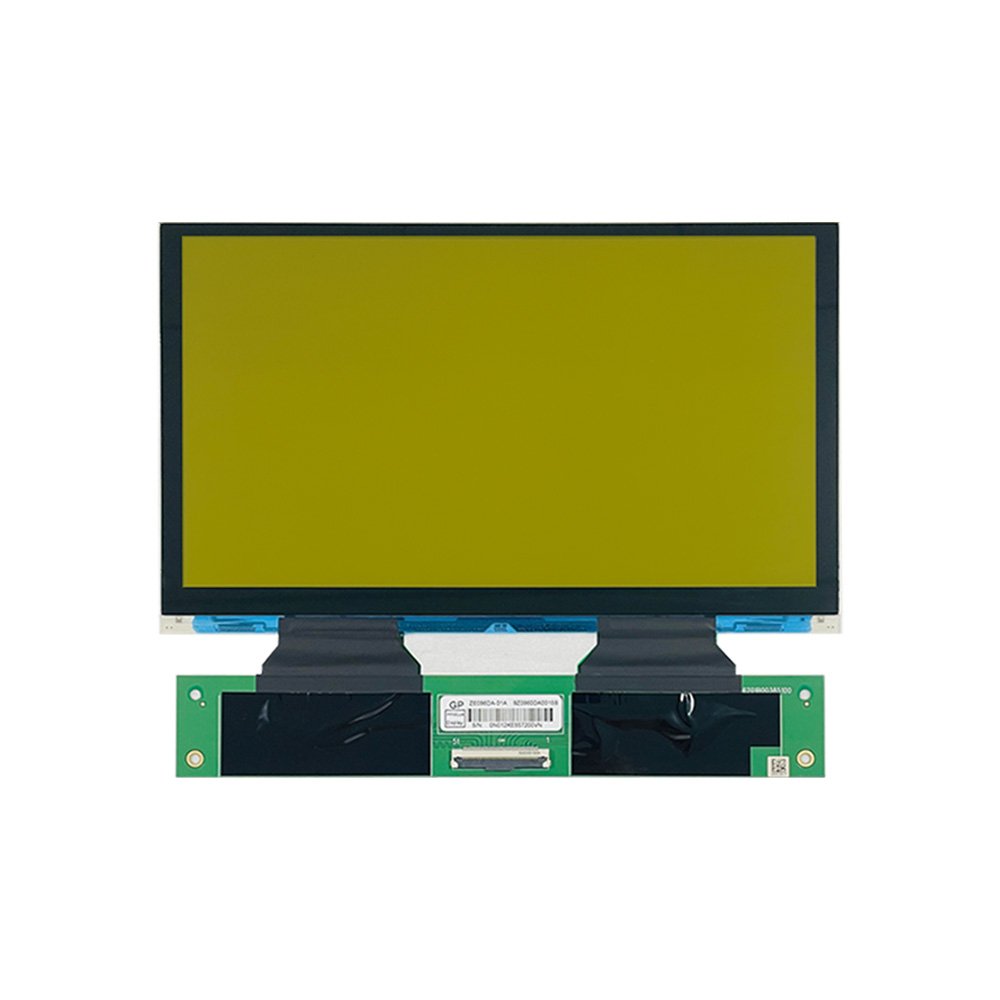
Precision is a critical factor in industrial 3D printing, where even micrometer-level errors can affect the functionality of printed parts. A 10.1 inch 16K mono LCD with yellow polarizer ensures high pixel-level accuracy and consistent UV exposure, minimizing layer misalignment and dimensional deviations. By combining ultra-high resolution with optimized light control, this display allows industrial MSLA and SLA printers to produce detailed prototypes and functional components with unmatched precision. Moreover, this combination of high pixel density and yellow polarizer film provides superior contrast, reducing errors caused by light scattering or pixel crosstalk.
Pixel-Level Accuracy and XY Resolution
The 16K resolution of this mono LCD creates extremely small pixel sizes, directly improving XY printing precision. Each pixel controls a tiny section of resin, so higher pixel density means finer features and smoother edges. The yellow polarizer further enhances pixel contrast, ensuring light does not bleed between adjacent pixels. Industrial printers equipped with a 10.1 inch 16K mono LCD with yellow polarizer can consistently reproduce fine holes, thin walls, lattice structures, and micro-details that lower-resolution panels cannot achieve.
Reducing Dimensional Errors
Dimensional errors in industrial 3D printing are often caused by uneven exposure or stray light. The yellow polarizer controls light transmission at the pixel level, preventing unintended curing in neighboring areas. By stabilizing exposure, a 10.1 inch 16K mono LCD with yellow polarizer improves layer alignment and repeatability across multiple print jobs. Compared to 8K or 4K panels, 16K panels reduce the deviation between CAD design and actual printed part, ensuring higher assembly accuracy for functional prototypes and industrial components.
Maintaining Layer Consistency
Consistent layer curing is crucial for tall or complex prints. Variations in light intensity or contrast can create weak points or uneven surfaces. The yellow polarizer film improves uniformity, enabling each layer to cure exactly as intended. Long print runs benefit from this consistency: parts produced at the beginning, middle, or end of a batch maintain the same dimensional fidelity. Industrial printers equipped with a 10.1 inch 16K mono LCD with yellow polarizer therefore reduce scrap rates, increase yield, and maintain high throughput in production environments.
Fine Feature Reproduction and Surface Quality
Industrial applications often demand high-fidelity reproduction of intricate features. Dental and medical models, jewelry, or micro-mechanical components require sharp edges and smooth surfaces. The combination of 16K resolution and yellow polarizer film ensures that pixel boundaries are clearly defined, reducing layer lines and improving surface smoothness. Using a 10.1 inch 16K mono LCD with yellow polarizer, manufacturers can produce parts with precise micro-details and aesthetically superior surfaces, even for highly complex geometries.
Continuous Production Performance
Industrial 3D printers are designed for continuous operation. Heat accumulation, UV light degradation, and environmental factors can introduce errors over time. The yellow polarizer helps maintain optical stability by reducing light scattering and contrast loss during long print cycles. A 10.1 inch 16K mono LCD with yellow polarizer ensures repeatable precision and consistent quality, supporting multi-hour or multi-day production runs without degradation of accuracy.
Integration with Industrial Systems
High-resolution 16K LCDs generate large amounts of data, requiring fast and reliable transmission. MIPI interfaces are commonly used in industrial printers to handle this bandwidth. A 10.1 inch 16K mono LCD with yellow polarizer can be seamlessly integrated into these systems, synchronizing precisely with printer firmware and mechanics. This ensures each pixel contributes accurately to curing, maintaining XY precision and enabling advanced printing strategies such as variable layer thickness or high-speed curing without losing detail.
Applications in Industrial 3D Printing
- Dental and medical models requiring sub-millimeter accuracy
- Functional mechanical prototypes with tight tolerances
- Jewelry and micro-featured components
- Production of small, high-precision parts for high-tech manufacturing
By using a 10.1 inch 16K mono LCD with yellow polarizer, manufacturers can achieve highly precise, repeatable results, reduce material waste, and minimize post-processing.
FAQ / Technical Advice
Q1: Why choose a yellow polarizer?
A: It enhances contrast and reduces light scattering, improving pixel-level accuracy for high-resolution 16K displays.
Q2: How does 16K resolution affect printing speed?
A: Higher resolution requires faster data transmission, but modern industrial printers with MIPI interfaces can maintain throughput while achieving finer detail.
Q3: How to maintain stability during long print cycles?
A: Proper cooling, firmware synchronization, and the yellow polarizer film help maintain optical consistency over extended production runs.