

Exposure Challenges Addressed by 14 inch 16K Mono LCD

Introduction
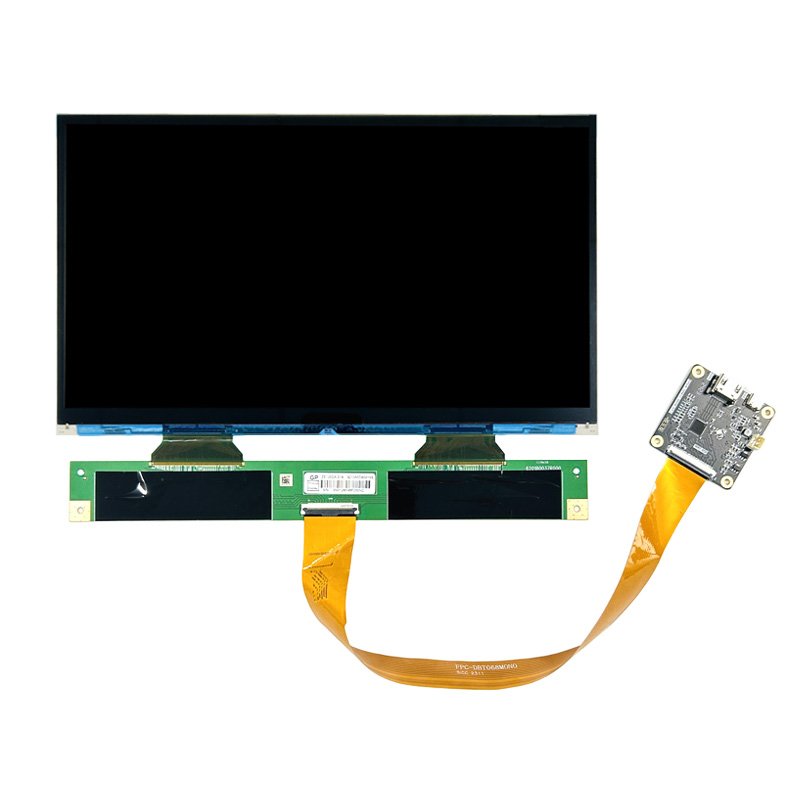
The 14 inch 16K mono LCD is increasingly used in large-format resin 3D printing systems, not simply for its resolution, but for its role in solving long-standing exposure challenges. As build volumes grow and resin formulations become more demanding, exposure control has emerged as a limiting factor in print quality and repeatability.
In LCD-based 3D printing, exposure accuracy directly influences dimensional stability, surface consistency, and mechanical performance. The transition toward high-resolution panels such as the 14 inch 16K mono LCD display reflects a broader effort to improve how light is controlled, distributed, and maintained across large printing areas.
Exposure Uniformity as a System-Level Challenge
Uniform exposure is not solely determined by the light source. It is the result of interaction between the UV engine, optical path, LCD panel, and resin characteristics. As printers scale up, maintaining uniform exposure becomes increasingly complex.
A large-format panel with insufficient resolution or inconsistent transmission can introduce localized over-curing or under-curing. The performance of the 14 inch 16K mono LCD supports finer control over light masking, allowing exposure patterns to remain consistent across the entire build surface.
This consistency is particularly important for applications where parts are printed in batches, as variation between positions on the build plate can compromise overall yield.
Pixel Density and Its Impact on Light Control
High pixel density plays a crucial role in how accurately exposure patterns are defined. In mono LCD systems, each pixel acts as a gate that either allows or blocks UV light. When pixel density is insufficient, edge transitions become less precise, leading to blurred boundaries or stair-stepping effects.
The 16K resolution of a 14 inch mono LCD enables sharper transitions between exposed and non-exposed areas. This precision supports accurate layer formation, especially for fine features and thin walls that are sensitive to exposure inconsistencies.
Rather than serving as a visual enhancement, pixel density becomes a functional requirement for reliable exposure control.
Managing Large-Area Exposure Stability
As exposure areas increase, small variations in light intensity can have amplified effects. Even minimal brightness differences across a large LCD can lead to cumulative dimensional errors over multiple layers.
The industrial design of the 14 inch 16K mono LCD addresses this issue by supporting stable light transmission characteristics across the panel. This stability helps reduce the risk of localized curing deviations, which are often difficult to detect until post-processing or part inspection.
For production-oriented printing, this level of exposure stability is essential for maintaining predictable output.
Resin Sensitivity and Exposure Precision
Modern resin formulations are increasingly specialized. Engineering resins, biocompatible materials, and high-temperature resins often require precise exposure windows to achieve desired mechanical properties.
The 14 inch 16K mono LCD for resin 3D printing enables accurate exposure timing and masking, allowing users to fine-tune curing parameters without compensating for panel-related inconsistencies. This capability reduces material waste and shortens process optimization cycles.
As resin chemistries continue to evolve, display precision becomes a critical enabler rather than a passive component.
Thermal Effects on Exposure Consistency
Thermal variation is an often-overlooked factor in exposure performance. During extended printing sessions, heat generated by the light engine and surrounding electronics can influence LCD behavior.
Panels designed without sufficient thermal stability may exhibit changes in transmission efficiency or pixel response over time. The 14 inch 16K mono LCD technology is better suited to sustained operation, helping maintain consistent exposure characteristics even during long production runs.
This thermal resilience contributes to overall process stability and reduces the likelihood of mid-print anomalies.
Exposure Accuracy and Dimensional Repeatability
Dimensional accuracy in resin printing depends on consistent exposure from layer to layer. Variations in exposure can accumulate, leading to warping, shrinkage, or tolerance drift.
By supporting precise and repeatable exposure patterns, the 14 inch 16K mono LCD module helps ensure that printed dimensions remain within expected ranges. This repeatability is particularly valuable in functional prototyping and low-volume manufacturing, where parts must meet specific mechanical or fitting requirements.
System Integration Considerations
Exposure control is influenced not only by the LCD panel itself but also by how it integrates with the overall printing system. Alignment, calibration, and controller synchronization all play a role.
The 14 inch 16K mono LCD screen is compatible with modern exposure control architectures, allowing manufacturers to implement advanced calibration routines and exposure compensation strategies. This integration flexibility supports continuous improvement in printer performance without requiring fundamental system redesigns.
Conclusion
The 14 inch 16K mono LCD addresses exposure challenges that become increasingly prominent as resin 3D printing systems grow in size and complexity. By enabling precise light masking, uniform transmission, and stable performance over time, it supports a more controlled and predictable printing process.
As exposure requirements continue to tighten—driven by advanced materials and industrial applications—the role of high-resolution mono LCD panels will remain central to the evolution of reliable, large-format 3D printing.