

Industrial Reliability Trends Behind the 14 inch 16K Mono LCD

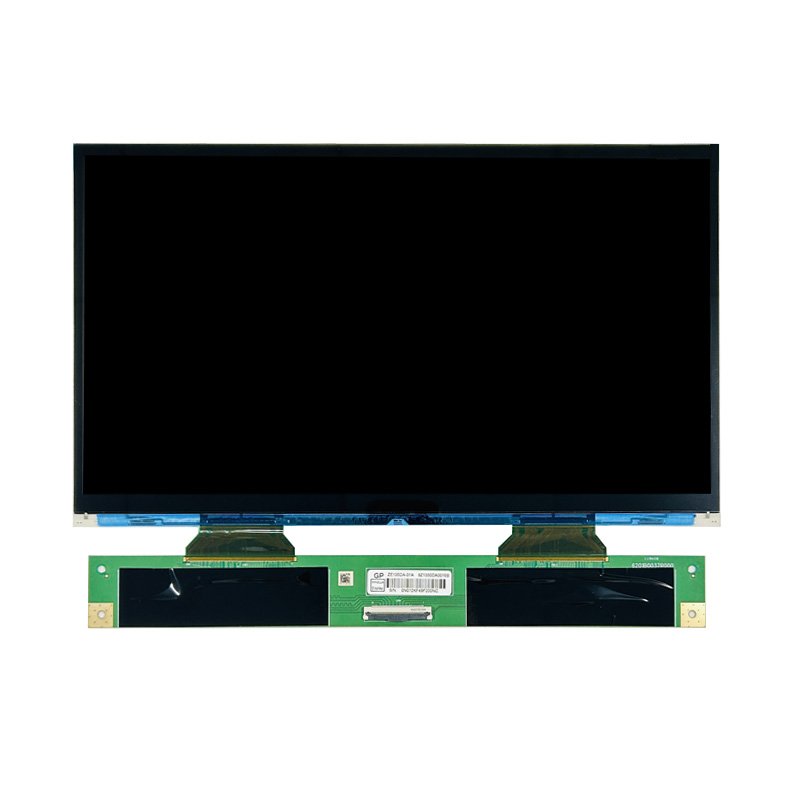
The 14 inch 16K mono LCD is increasingly associated with a shift toward continuous and production-oriented resin 3D printing. As additive manufacturing systems move beyond prototyping and into sustained industrial use, the ability of core components to perform reliably over long operating cycles has become a defining requirement.
Unlike short-run printing environments, continuous operation places cumulative stress on display panels. Thermal load, prolonged UV exposure, and mechanical integration all influence how an LCD panel behaves over time. The adoption of the 14 inch 16K mono LCD display reflects an industry-wide effort to address these challenges at the system level rather than through frequent maintenance or component replacement.
Continuous Printing as an Industrial Requirement
In industrial settings, 3D printers are often expected to operate with minimal downtime. Production schedules, material utilization, and workforce planning depend on predictable machine availability.
The performance of the 14 inch 16K mono LCD supports this operational model by enabling stable exposure behavior across extended print cycles. Rather than optimizing for short-term output, such panels are selected for their ability to maintain consistent characteristics over hundreds or thousands of printing hours.
This focus on endurance aligns with broader trends in industrial automation and digital manufacturing.
Long-Term Exposure Stability
Exposure stability is not only a question of brightness but also of consistency over time. In long-running print jobs, even subtle drift in light transmission can affect layer adhesion and dimensional accuracy.
The industrial design of the 14 inch 16K mono LCD emphasizes controlled UV transmission and resistance to degradation caused by continuous exposure. This helps maintain uniform curing behavior throughout long production runs, reducing the need for frequent recalibration or exposure compensation.
Such stability is particularly valuable in applications where printed parts must meet repeatable performance criteria.
Thermal Management and Panel Behavior
Heat accumulation is a natural consequence of continuous operation. Light engines, power electronics, and surrounding mechanical components all contribute to the thermal environment experienced by the LCD panel.
Panels not designed for long-term use may exhibit changes in optical behavior as temperatures fluctuate. The 14 inch 16K mono LCD for industrial 3D printing is better suited to these conditions, supporting consistent response characteristics even as operating temperatures vary.
Effective thermal resilience contributes to predictable print outcomes and reduces the likelihood of intermittent defects.
Reliability Across Large Build Areas
Large-format printers introduce additional complexity due to the scale of the exposure area. Maintaining uniform performance across a wide panel surface becomes more challenging as operating hours accumulate.
The 14 inch 16K mono LCD technology supports consistent behavior across the full active area, helping ensure that parts printed near the edges of the build plate perform similarly to those printed at the center. This uniformity is critical for batch production environments, where multiple components are produced simultaneously.
Supporting Production-Oriented Workflows
As resin 3D printing is increasingly used for functional parts rather than visual prototypes, production workflows place greater emphasis on repeatability and predictability.
The 14 inch 16K mono LCD contributes to these workflows by enabling stable layer formation over extended periods. This reliability supports downstream processes such as quality inspection, post-curing, and assembly, where consistency simplifies process control.
In this context, the LCD panel becomes a foundational element of the production chain rather than a consumable component.
Reduced Maintenance and Operational Efficiency
Frequent component replacement or recalibration can disrupt production schedules and increase operating costs. Industrial users therefore favor systems designed for extended service intervals.
The 14 inch 16K mono LCD screen supports reduced maintenance requirements by maintaining stable optical performance over time. This reduces the frequency of exposure tuning and minimizes unplanned downtime caused by display-related issues.
Operational efficiency, in this sense, is achieved through stability rather than peak performance metrics.
Alignment with Industrial Adoption Trends
The broader adoption of resin 3D printing in manufacturing environments reflects a shift toward digital, flexible production methods. As these systems are integrated into established industrial processes, expectations around reliability and lifecycle performance increase.
The 14 inch 16K mono LCD aligns with these expectations by supporting continuous operation scenarios commonly found in industrial settings. Its role is not limited to enabling high resolution but extends to supporting the overall robustness of modern 3D printing systems.
Conclusion
The 14 inch 16K mono LCD plays a critical role in enabling continuous and long-term operation in industrial resin 3D printing. By supporting stable exposure behavior, thermal resilience, and uniform performance across large build areas, it contributes to reliable production workflows.
As additive manufacturing continues to mature, the importance of components designed for sustained operation will only increase. In this context, the 14 inch 16K mono LCD represents a step toward more dependable and production-ready 3D printing systems.