

Advancing 3D Printing with 16-inch 8K Mono LCD Technology

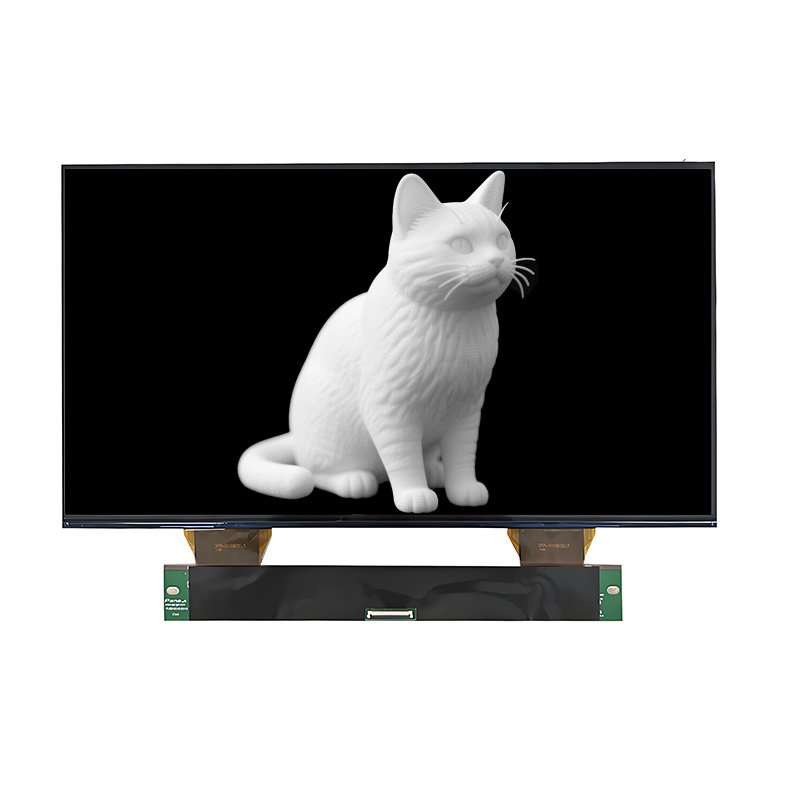
Introduction: Pushing 3D Printing Boundaries
The field of resin-based 3D printing is evolving rapidly, and display technology has become a key factor in achieving higher precision and finer detail. A notable advancement in this space is the 16-inch 8K mono LCD, which allows for extremely accurate layer exposure and detailed reproduction of complex 3D models.
This display technology is particularly relevant for applications where surface quality, dimensional accuracy, and model reliability are critical. By providing ultra-high pixel density and uniform brightness, the 16-inch 8K mono LCD ensures that each layer of resin cures consistently, significantly reducing defects and improving overall print quality.
Learn more about 16-inch 8K mono LCD and how it is shaping modern 3D printing technology.
Technical Advantages for Resin 3D Printing
Resin-based 3D printers rely on precise light exposure to cure each layer accurately. The 16-inch 8K mono LCD brings several technical improvements:
- Ultra-High Pixel Density: With 7680×4320 pixels, the display allows fine details and microstructures to be reproduced with high fidelity.
- Monochrome Efficiency: Unlike RGB panels, monochrome LCDs let more UV light pass through, reducing curing time per layer without compromising accuracy.
- Uniform Exposure: Wide viewing angles and consistent brightness ensure that all regions of the build area receive equal light, minimizing layer inconsistencies.
- Large Build Area: The 16-inch size supports larger models, giving designers more freedom without losing resolution.
These benefits enable higher model reliability, smoother surfaces, and more intricate prints than was possible with previous generations of LCD panels.
Impact on Printing Workflows
The integration of 16-inch 8K mono LCDs has notable effects on 3D printing workflows:
- Faster Iteration: Reduced curing times allow multiple prototypes to be printed in a shorter period.
- Improved Accuracy: High pixel resolution ensures that every feature, from small mechanical parts to intricate decorative elements, is reproduced precisely.
- Consistent Quality: Uniform layer exposure leads to fewer failed prints and a higher success rate across large models.
- Optimized Post-Processing: Smoother surfaces reduce the need for sanding, polishing, or other finishing work.
These workflow improvements are particularly beneficial for designers, engineers, and advanced hobbyists seeking reliable, high-detail prints.
Explore applications of 16-inch 8K mono LCD in additive manufacturing.
Trends Driving Adoption
Recent market trends indicate growing interest in large-format, high-resolution monochrome LCDs for 3D printing:
- Precision-Critical Applications: Users producing miniatures, jewelry, or detailed prototypes increasingly require displays that support ultra-fine detail.
- High-Throughput Printing: Larger panels with faster layer curing allow printing multiple small objects simultaneously, improving productivity.
- Integration with Advanced Slicing Software: Software can optimize exposure patterns to leverage high pixel resolution, reducing layer artifacts and supporting complex geometries.
- Desktop and Professional Market Expansion: Monochrome 8K panels are becoming standard in both high-end desktop printers and industrial additive manufacturing systems.
Analysts expect these trends to continue as the benefits of ultra-high-resolution LCDs become more widely recognized across professional and enthusiast markets.
Expert Perspectives on High-Resolution Displays
Industry professionals report that integrating 16-inch 8K mono LCDs into 3D printers has transformed their printing processes. Key insights include:
- Layer Consistency: Users note a significant reduction in layer separation or uneven curing, improving model fidelity.
- Surface Finish: High-resolution monochrome displays allow smoother surfaces, which reduces post-processing requirements.
- Complex Designs: Designers can experiment with highly detailed geometries that were previously impossible to achieve on smaller or lower-resolution screens.
- Reliability Across Prints: Large, uniform panels maintain consistent quality over multiple print runs, reducing waste and improving efficiency.
These perspectives reinforce the view that high-resolution monochrome LCDs are critical for advancing 3D printing quality and efficiency.
Future Prospects in 3D Printing
The 16-inch 8K mono LCD is expected to play a central role in the next generation of resin 3D printers. Future developments may include:
- Larger High-Resolution Panels: Expanding the printable area while maintaining ultra-fine detail.
- Integration with AI Slicing Algorithms: Optimizing layer exposure patterns automatically for complex models.
- Standardization Across Printers: Adoption of monochrome 8K panels as a benchmark for professional-grade 3D printing.
- Increased Productivity: Faster curing times and reduced post-processing will streamline additive manufacturing workflows.
The technology offers the potential for both professional and hobbyist users to achieve levels of precision and reliability previously unattainable with conventional displays.
Check technical insights on 16-inch 8K mono LCD and stay updated on 3D printing innovations.
Conclusion
The adoption of 16-inch 8K mono LCDs represents a significant evolution in 3D printing display technology. By providing ultra-high resolution, precise layer control, and a larger build area, these panels enhance model fidelity, reduce print errors, and support complex designs.
As resin-based 3D printing continues to advance, high-resolution monochrome LCDs are poised to become the standard for professional-grade additive manufacturing, enabling designers, engineers, and enthusiasts to achieve unprecedented levels of precision and efficiency.