

Mono LCD vs RGB LCD: Why 10.1 inch 16K Mono LCD Matters

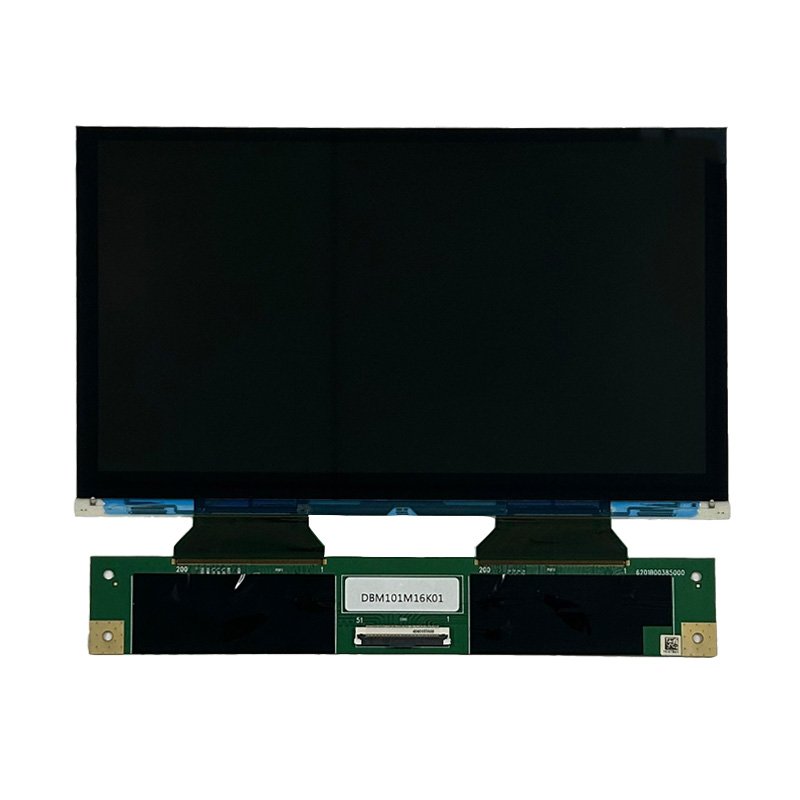
Mono LCD vs RGB LCD: Why 10.1 inch 16K Mono LCD Matters
The Display Technology Behind Modern Resin 3D Printers
Resin 3D printing has evolved rapidly over the past several years. While early desktop machines focused mainly on affordability and accessibility, the current generation of printers is increasingly defined by precision, speed, and reliability. One of the most important components influencing these factors is the display panel used to control the UV light exposure during printing.
In modern LCD-based resin printers, the screen functions as a dynamic mask that selectively allows ultraviolet light to pass through specific pixels. This process determines the shape of every printed layer. As a result, the display technology directly impacts print accuracy, production efficiency, and overall machine lifespan.
A new generation of displays, including the 10.1 inch 16K mono LCD, has emerged as a key driver behind the latest advancements in resin printing. Compared with earlier RGB-based screens, mono LCD technology offers significantly higher UV transmission efficiency, faster curing speeds, and improved durability. Because of these advantages, many printer manufacturers are transitioning away from RGB panels and adopting mono LCD displays as the new industry standard.
Understanding the differences between these two display technologies helps explain why the shift toward mono LCD screens is accelerating across the additive manufacturing industry.
How RGB LCD Panels Work in Resin Printing
RGB LCD panels were originally designed for consumer electronics such as televisions, laptops, and smartphones. These displays rely on three subpixels—red, green, and blue—to create full-color images for visual viewing.
When early resin 3D printers began using LCD masking technology, manufacturers adapted these widely available RGB screens as a cost-effective solution. However, RGB displays include color filters that significantly block ultraviolet light.
This limitation creates several performance challenges when used in resin printers:
• Reduced UV light transmission
• Slower layer curing times
• Higher energy consumption
• Shorter display lifespan due to heat buildup
Because the UV light must pass through multiple color filter layers, only a fraction of the light actually reaches the resin surface. This forces printers to increase exposure times, slowing down the overall printing process.
While RGB panels made early LCD printers possible, the technology was never fully optimized for UV-based photopolymerization.
Why Mono LCD Displays Are More Efficient
Mono LCD displays were developed specifically to address the limitations of RGB panels in resin printing systems.
Unlike RGB displays, mono LCD screens remove the color filter layer entirely. Without these filters blocking the light, significantly more ultraviolet energy can pass through the panel.
This change leads to several important advantages:
Higher UV Transmission
Mono LCD screens can transmit several times more UV light than RGB displays. Higher transmission means the resin cures faster and more consistently.
Faster Printing Speeds
Because the exposure time per layer is shorter, printers equipped with mono LCD panels can complete prints much faster.
Longer Screen Lifespan
Mono LCD displays are designed to withstand prolonged UV exposure. This typically results in a display lifespan several times longer than RGB screens.
Lower Heat Generation
Greater light efficiency reduces the amount of heat generated by the screen, which improves system stability and reliability during long print jobs.
These improvements are a major reason why mono LCD panels have quickly become the preferred technology in modern resin printers.
The Role of Ultra-High Resolution Displays
Beyond transmission efficiency, resolution has become another critical factor in display performance.
Higher resolution means more pixels are available to define the shape of each printed layer. This directly affects the level of detail that can be reproduced in a printed object.
In the early days of LCD resin printing, typical display resolutions included:
• 2K screens
• 4K screens
As the technology matured, manufacturers introduced:
• 6K panels
• 8K displays
• 12K industrial screens
Now, ultra-high-resolution panels such as 16K displays are pushing the limits even further.
A screen like the 10.1 inch 16K mono LCD demonstrates how modern display technology can combine extremely high pixel density with a larger screen size. This enables printers to maintain microscopic detail across a wide build platform, something that was difficult to achieve with earlier display generations.
Large Build Volume Without Sacrificing Detail
One of the biggest challenges in resin printer design has always been balancing resolution and build size.
If the screen is larger but the resolution remains the same, each pixel becomes bigger. Larger pixels reduce the precision of printed details. For many professional applications, this trade-off is unacceptable.
Ultra-high-resolution displays solve this problem by dramatically increasing pixel counts.
For example, high-resolution panels such as the
10.1 inch 16K mono LCD screen
allow manufacturers to maintain very small pixel sizes while expanding the printing area.
This enables printers to produce larger parts or multiple smaller components simultaneously without compromising detail accuracy.
For industries like dental manufacturing, jewelry design, and precision engineering, this capability is particularly valuable.
Integration Challenges for High-Resolution Displays
While high-resolution displays provide clear benefits, integrating them into resin printers also presents technical challenges.
As display resolution increases, the amount of data required to control the screen grows dramatically. Each layer image must be transmitted from the printer’s mainboard to the display quickly and reliably.
Modern LCD panels address this issue through high-speed communication interfaces such as MIPI connections. These interfaces allow printers to handle massive image data streams while maintaining stable performance.
For instance, the
10.1 inch 16K mono LCD
uses a high-speed interface designed to support ultra-high-resolution image transmission during continuous printing operations.
Efficient data handling is essential for ensuring consistent layer exposure and preventing printing errors during long production runs.
Industry Adoption of Mono LCD Technology
Over the last few years, the shift from RGB to mono LCD displays has become increasingly visible across the resin printing market.
Many leading printer manufacturers now rely exclusively on mono LCD technology for their newest machines. This transition reflects the industry’s demand for faster production speeds and higher precision output.
Several sectors are driving this adoption trend:
Dental Laboratories
Dental clinics require extremely precise models for orthodontics and surgical planning. Mono LCD displays enable printers to reproduce fine structures with higher accuracy.
Jewelry Casting
Jewelry designers depend on high-resolution printing to create detailed wax patterns used in lost-wax casting processes.
Engineering Prototyping
Product designers and engineers benefit from faster print cycles and improved dimensional accuracy when testing prototypes.
Collectible Miniatures
The gaming and hobby industries rely heavily on high-detail resin printing for figurines, tabletop miniatures, and collectibles.
As these applications continue to expand, demand for high-resolution mono LCD displays is expected to grow significantly.
FAQ: Common Questions About Mono LCD Displays
What is a mono LCD in resin 3D printing?
A mono LCD is a monochrome display panel used in resin printers to control UV light exposure. Unlike RGB screens, mono LCD panels do not include color filters, allowing more UV light to pass through and cure resin faster.
Why are mono LCD screens faster than RGB displays?
Mono LCD screens transmit significantly more UV light because they lack color filters. This allows resin layers to cure more quickly, reducing exposure time for each layer.
Does higher LCD resolution improve print quality?
Yes. Higher resolution means smaller pixels, which allows printers to produce finer details and smoother surfaces.
Why are 16K LCD screens becoming popular?
16K screens provide extremely high pixel density across large display sizes. This allows printers to maintain high detail resolution even when printing large objects.
Conclusion
Display technology continues to play a central role in the evolution of resin 3D printing. While RGB LCD panels helped make early desktop printers possible, their limitations in UV transmission and durability have led to the rapid adoption of mono LCD technology.
Modern displays such as the 10.1 inch 16K mono LCD illustrate how far the technology has progressed. By combining ultra-high resolution with improved light transmission and high-speed data interfaces, these screens enable printers to achieve faster production speeds and exceptional detail accuracy.
As resin printing continues to expand into professional and industrial applications, mono LCD displays are expected to remain a critical component shaping the future of high-precision additive manufacturing.