

Common 3D Printer LCD Exposure Problems Detected Using a UV Light Meter

Introduction
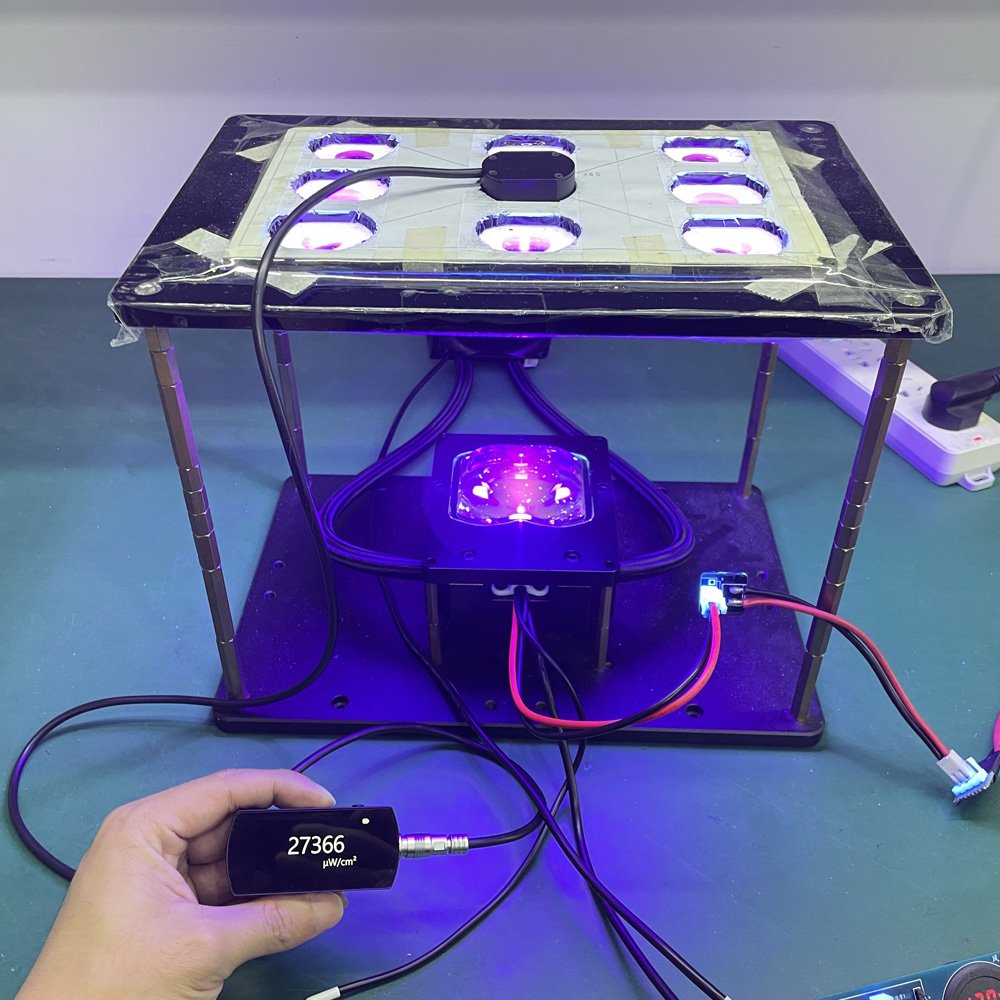
In resin 3D printing, exposure accuracy depends on more than slicer settings and resin profiles. Many print defects originate from uneven ultraviolet energy delivered through the LCD panel, yet these issues are often difficult to diagnose using visual inspection or test prints alone. This is where a UV light meter becomes an essential diagnostic tool.
A UV light meter allows engineers and technicians to directly measure the ultraviolet energy responsible for resin curing. By using a UV light meter to evaluate LCD exposure behavior, hidden optical problems can be identified early—long before they lead to recurring print failures or degraded part quality.
Why LCD Exposure Problems Are Difficult to Identify
One of the main challenges in resin 3D printing is that UV exposure is invisible to the human eye. Even when an LCD panel appears to function normally, the actual light energy transmitted through different areas of the screen may vary significantly.
Common reasons exposure problems go unnoticed include:
- UV wavelengths cannot be visually assessed
- Print defects appear inconsistently
- Software compensation temporarily masks hardware issues
Without direct measurement, users often misinterpret exposure-related defects as resin or slicing problems.
Role of a UV Light Meter in Exposure Diagnosis
A UV light meter is specifically designed to measure ultraviolet intensity at wavelengths commonly used in resin 3D printing, typically around 405nm. Unlike indirect evaluation methods, it provides objective, numerical data that directly reflects curing energy.
Using a UV light meter makes it possible to:
- Quantify actual UV output across the LCD
- Compare exposure levels at different screen locations
- Detect patterns linked to optical or hardware defects
This transforms exposure troubleshooting from guesswork into a data-driven process.
Common LCD Exposure Problems Identified by a UV Light Meter
When UV measurements are taken across the LCD surface, several recurring exposure problems are commonly revealed.
Edge Underexposure
Edge underexposure occurs when UV intensity near the edges of the LCD is lower than in the center. This issue is frequently caused by LED backlight layout or insufficient optical diffusion.
Typical symptoms include:
- Failed supports near the build plate edges
- Incomplete curing in corner regions
- Reduced print reliability for large models
A UV light meter clearly shows intensity drop-off patterns that correlate with these failures.
Central Overexposure
In some printers, UV energy is concentrated near the center of the LCD. This results in localized overexposure, even when global exposure settings appear correct.
Consequences include:
- Loss of fine details
- Excessive resin shrinkage
- Increased internal stress in printed parts
A UV light meter helps distinguish true overexposure from slicer-related parameter issues.
Asymmetrical UV Distribution
Asymmetrical exposure patterns occur when one side of the LCD consistently receives more UV energy than the other. This is often related to:
- Optical misalignment
- Uneven LED aging
- Mechanical stress on the optical stack
By mapping UV intensity with a UV light meter, these directional imbalances become immediately visible.
Gradual Exposure Degradation Over Time
Exposure performance rarely degrades suddenly. Instead, LCD panels slowly lose transmission efficiency due to:
- Prolonged UV exposure
- Polarizer aging
- Thermal cycling
Regular measurements using a UV light meter allow users to track exposure trends and detect degradation before print quality noticeably declines.
Why Test Prints Are Not a Reliable Diagnostic Method
Many users rely on calibration prints or exposure test models to evaluate printer performance. While useful for initial setup, these methods cannot isolate exposure behavior from other variables such as resin chemistry or temperature.
A UV light meter directly measures the physical quantity that matters—UV energy—making it far more reliable for diagnosing exposure-related problems.
Practical Measurement Workflow Using a UV Light Meter
A typical exposure diagnostic process includes:
- Removing the resin vat to expose the LCD
- Activating a full-field exposure pattern
- Dividing the LCD surface into a consistent grid
- Measuring UV intensity at each grid point
- Analyzing spatial exposure distribution
This structured approach ensures repeatable and meaningful results.
Interpreting UV Light Meter Data
Different measurement patterns point to different root causes:
- Radial gradients suggest diffusion limitations
- Sharp localized drops indicate component degradation
- Directional slopes often signal alignment issues
Understanding these patterns allows technicians to apply targeted corrective actions instead of broad parameter changes.
Maintenance Decisions Guided by UV Light Meter Data
Once exposure problems are confirmed, UV light meter data supports informed maintenance decisions such as:
- Adjusting exposure compensation strategies
- Scheduling LCD replacement
- Improving thermal management
This prevents unnecessary component replacement and reduces downtime.
Use of UV Light Meters in Manufacturing and Service
In professional environments, a UV light meter is often used for:
- Factory calibration and validation
- Incoming LCD inspection
- After-service diagnostics
Measurement records also support quality traceability and performance benchmarking.
UV light meter for 3D printers
Importance of 405nm-Specific Measurement
Resin curing efficiency depends on wavelength-specific energy delivery. A 405nm UV light meter ensures that measurements accurately represent the curing process rather than visible-light artifacts.
Using the correct measurement wavelength is critical for reliable exposure analysis.
Conclusion
Exposure-related print defects in resin 3D printers are often rooted in uneven or degraded UV delivery through the LCD panel. A UV light meter provides the direct measurement capability needed to identify these problems accurately and efficiently.
By incorporating UV light meter measurements into diagnostic and maintenance workflows, users can detect exposure issues early, maintain consistent curing performance, and significantly improve long-term print reliability.