

Continuous Operation Demands Behind the 14 inch 16K Mono LCD

ntroduction
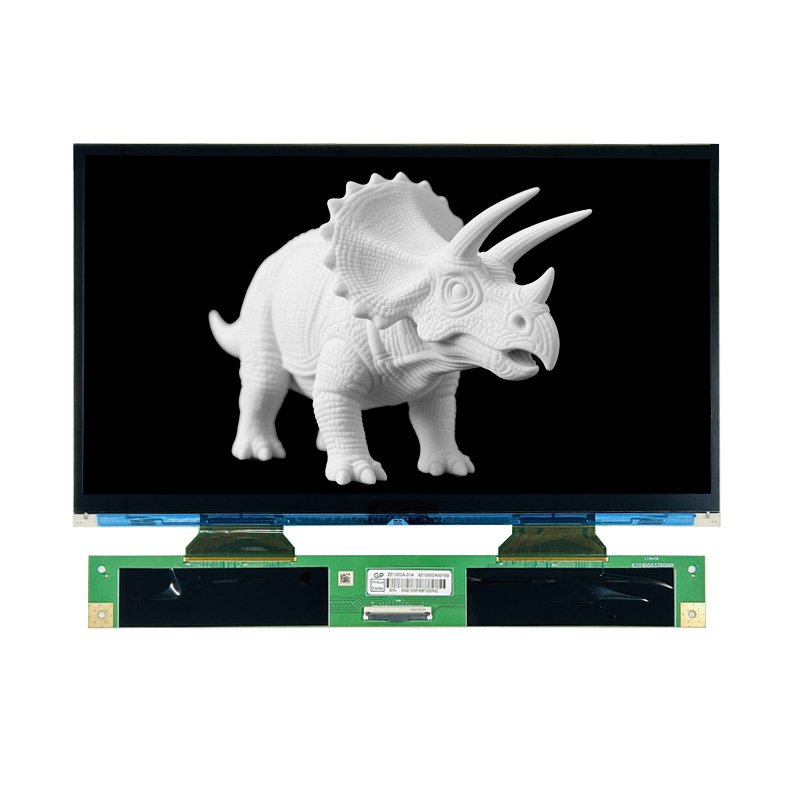
The 14 inch 16K mono LCD is increasingly discussed in the context of continuous operation within industrial resin 3D printing environments. As additive manufacturing systems evolve beyond short-run prototyping, extended operating cycles have become a defining requirement for production-oriented printers.
Continuous operation introduces a different set of constraints compared to intermittent or experimental use. Components are expected to perform consistently under sustained thermal load, prolonged UV exposure, and minimal downtime. Within this context, the 14 inch 16K mono LCD display is not viewed as a standalone component, but as part of a broader system designed to support long-term operational stability.
Continuous Operation as a System-Level Expectation
In industrial manufacturing environments, machine availability is closely tied to production planning and cost control. Resin 3D printers used in these settings are often expected to operate for extended periods, sometimes across multiple shifts.
Such conditions place cumulative stress on optical components. Over time, small deviations in exposure behavior can compound, leading to dimensional inconsistencies or surface defects. The performance of the 14 inch 16K mono LCD reflects an industry response to these challenges, emphasizing stability across extended print cycles rather than peak short-term output.
This shift aligns with a broader trend toward treating additive manufacturing equipment as production assets rather than experimental tools.
Exposure Stability Over Long Print Cycles
Exposure stability is not solely defined by initial calibration. During continuous operation, factors such as thermal drift, material aging, and light source variability can influence curing behavior.
The industrial design of the 14 inch 16K mono LCD addresses these concerns by focusing on consistent light transmission characteristics over time. By maintaining stable optical behavior across prolonged exposure periods, the panel supports predictable layer formation even in long-running print jobs.
This predictability is essential in environments where printers are expected to deliver repeatable results without frequent intervention.
Thermal Accumulation and Display Behavior
Thermal management becomes increasingly important as printers transition to continuous operation. Heat generated by UV light engines, power electronics, and surrounding mechanical components can influence display performance.
LCD panels not designed for sustained thermal exposure may experience changes in transmission efficiency or pixel response. The 14 inch 16K mono LCD for industrial 3D printing is better aligned with operating environments where temperature variation is unavoidable, supporting consistent behavior throughout extended use.
Thermal resilience, in this context, contributes directly to print reliability rather than serving as an isolated specification.
Large Build Areas and Long-Term Uniformity
Large-format resin printers introduce additional complexity due to the size of the exposure surface. Maintaining uniform behavior across a wide panel becomes more challenging as operating hours accumulate.
The 14 inch 16K mono LCD technology supports uniform performance across its active area, helping ensure that parts printed at different positions on the build plate remain consistent over time. This uniformity is particularly relevant for batch production workflows, where multiple components are produced simultaneously and evaluated against the same quality criteria.
Maintenance Intervals and Operational Efficiency
In continuous production environments, maintenance intervals have a direct impact on overall efficiency. Frequent recalibration or component replacement can disrupt workflows and increase operational costs.
The 14 inch 16K mono LCD supports extended maintenance cycles by maintaining stable exposure characteristics over time. This reduces the need for repeated exposure adjustments and minimizes unplanned downtime related to display behavior.
Operational efficiency, in this sense, is achieved through consistency rather than throughput alone.
Integration into Production-Oriented Workflows
As resin 3D printing becomes more integrated into established manufacturing processes, expectations around consistency and traceability increase. Components must perform predictably to support downstream processes such as inspection, post-curing, and assembly.
The 14 inch 16K mono LCD screen plays a role in enabling this predictability by supporting stable layer formation across long print runs. When exposure behavior remains consistent, quality control processes become more straightforward and less reactive.
This integration reinforces the importance of display reliability within the broader production ecosystem.
Industrial Adoption Trends
The growing adoption of resin 3D printing in industrial settings reflects a shift toward digital, flexible manufacturing methods. As these systems are deployed alongside traditional equipment, expectations around uptime and lifecycle performance rise accordingly.
The 14 inch 16K mono LCD is increasingly associated with this transition, not because of headline specifications, but because it aligns with the operational realities of industrial use. Continuous operation, rather than peak resolution, becomes the defining criterion.
Conclusion
The 14 inch 16K mono LCD is best understood within the context of continuous operation and long-term system stability. As resin 3D printing continues to mature, the demands placed on display components extend beyond resolution metrics to include endurance, thermal resilience, and exposure consistency.
By supporting stable performance across extended operating cycles, the 14 inch 16K mono LCD reflects a broader industry shift toward production-ready additive manufacturing systems designed for sustained industrial use.