

How 10.1 inch 16K Mono LCD Enables Large-Format Resin 3D Printing

How 10.1 inch 16K Mono LCD Enables Large-Format Resin 3D Printing
Summary
Large-format resin 3D printing is one of the fastest-growing segments of additive manufacturing. As demand increases for bigger prints without sacrificing precision, display technology has become a critical component of next-generation printers.
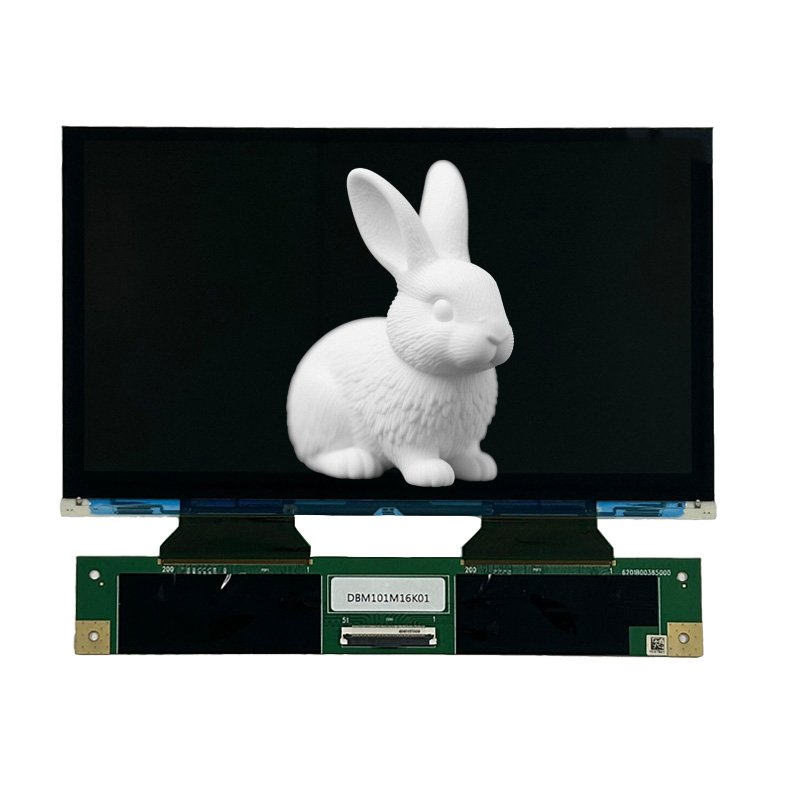
The 10.1 inch 16K mono LCD represents a major step forward by combining ultra-high resolution with a larger printing area. This combination enables manufacturers, dental labs, and industrial designers to produce detailed parts at larger scales while maintaining the accuracy expected from professional resin printing systems.
The Growing Demand for Large-Format Resin Printing
Over the past few years, resin 3D printing has evolved from a niche prototyping technology into a production-level manufacturing solution. Industries such as dental manufacturing, medical modeling, consumer product design, and jewelry production increasingly rely on resin printers for precision components.
However, as applications expand, many users face a common limitation: print size.
Traditional resin printers are optimized for small parts with extremely high detail. While this works well for miniatures and small prototypes, larger applications require more build volume without compromising resolution.
This is where display technology becomes critical. The 10.1 inch 16K mono LCD provides a new balance between large printing area and ultra-fine pixel density, enabling resin printers to produce bigger components with remarkable surface quality.
Why Display Technology Matters in Resin 3D Printing
Unlike FDM printing, resin 3D printing relies on masked stereolithography (MSLA) technology. In this process, a UV light source passes through an LCD panel that selectively blocks or allows light to cure liquid resin layer by layer.
Because of this mechanism, the LCD panel determines several key aspects of printing performance:
- Print resolution
- Surface finish
- Layer exposure speed
- Printing area
- Reliability of long-term operation
As printers move toward higher productivity and industrial use, display panels must support both larger build platforms and finer pixel sizes.
This trend has accelerated the adoption of 16K resolution displays in professional resin printers.
How 16K Resolution Improves Print Accuracy
Resolution directly affects the detail level of printed objects. With a 16K display, the number of pixels dramatically increases compared with earlier generations such as 4K or 8K screens.
More pixels mean:
- Smaller pixel pitch
- Higher XY resolution
- Reduced visible layer lines
- Sharper edges and textures
For industries like dentistry and jewelry manufacturing, this improvement can significantly enhance product quality. Tiny features such as dental margins, engraving details, and micro-structures become easier to reproduce accurately.
Higher resolution also reduces the need for additional post-processing, which helps manufacturers streamline their production workflows.
Advantages of a 10.1-Inch Display Size
While resolution is critical, display size also plays a major role in determining printer performance.
A 10.1-inch LCD panel offers several advantages for modern resin printers:
Larger Build Volume
A larger screen enables printers to support bigger build platforms. This allows manufacturers to produce multiple parts simultaneously or print larger objects in a single run.
Improved Production Efficiency
For industrial users, productivity is just as important as resolution. Larger build areas allow production batches to increase without extending printing time.
Greater Design Flexibility
Designers and engineers benefit from fewer limitations when creating parts. Larger components can be printed without splitting them into multiple pieces.
Performance Advantages of Mono LCD Technology
Mono LCD displays have become the preferred technology for resin printers because they offer several key advantages compared with traditional RGB LCD panels.
Higher Light Transmission
Mono LCD panels allow significantly more UV light to pass through the screen, improving curing efficiency.
Faster Printing Speeds
Because more light reaches the resin, exposure times can be reduced, enabling faster layer curing.
Longer Lifespan
Mono LCD panels are also known for their durability, which is essential for printers used in continuous production environments.
For these reasons, mono LCD technology is widely adopted in modern professional printers.
Industrial Applications Driving High-Resolution Displays
Several industries are accelerating the adoption of high-resolution mono LCD panels.
Dental Manufacturing
Dental labs require extremely precise models for crowns, bridges, and aligners. High-resolution displays ensure accurate reproduction of tooth geometry.
Jewelry Production
Jewelry designers rely on resin printing for casting patterns and intricate details. Ultra-high resolution enables sharper engravings and delicate structures.
Medical Modeling
Hospitals and research institutions increasingly use resin printing to produce anatomical models for surgical planning and medical training.
Product Design and Prototyping
Design teams use resin printing to create highly detailed prototypes that closely resemble final products.
In all these applications, display resolution and printing area directly influence manufacturing quality.
Future Trends in Resin 3D Printer Displays
As resin printing continues to evolve, several technology trends are emerging.
Higher Resolutions
Display resolutions will continue increasing beyond 16K as manufacturers pursue even finer details.
Larger Print Platforms
Future printers will likely combine ultra-high resolution with larger build areas to support industrial manufacturing.
Improved Display Durability
Longer display lifespans will be essential for printers used in continuous production environments.
Faster Exposure Technologies
Advancements in LCD design will enable faster exposure times and higher printing speeds.
These developments will further expand the role of resin printing in professional manufacturing.
Exploring Advanced Display Solutions
For companies developing next-generation resin printers, choosing the right display panel is a critical design decision. Advanced display modules designed specifically for MSLA printing can significantly improve printer performance.
Manufacturers looking to explore high-resolution mono LCD technology can review the specifications of the
10.1 inch 16K mono LCD
to understand how ultra-high resolution displays support modern resin printing systems.
Additionally, understanding the broader category of
<a href=”https://duobond-solutions.com/product-category/mono-lcd/”>mono LCD screens for 3D printers</a>
can help engineers identify suitable display options for different printer architectures.
FAQ
What is a mono LCD in resin 3D printers?
A mono LCD is a monochrome display used in MSLA resin printers to control UV light exposure during the printing process. It offers higher light transmission and faster curing speeds than traditional RGB LCD panels.
Why is 16K resolution important for resin printing?
Higher resolution increases the number of pixels on the screen, which improves print accuracy and surface quality. This allows printers to produce finer details and smoother surfaces.
What advantages does a 10.1-inch LCD panel offer?
A 10.1-inch display provides a larger printing area, allowing printers to produce bigger objects or multiple parts in a single print job.
Are high-resolution displays necessary for industrial resin printing?
For applications requiring extremely fine details—such as dental models, jewelry patterns, and medical components—high-resolution displays significantly improve print quality and production accuracy.