

How 16-inch 8K Mono LCD Is Shaping Next-Generation 3D Printing

Introduction: Advancing 3D Printing Technology
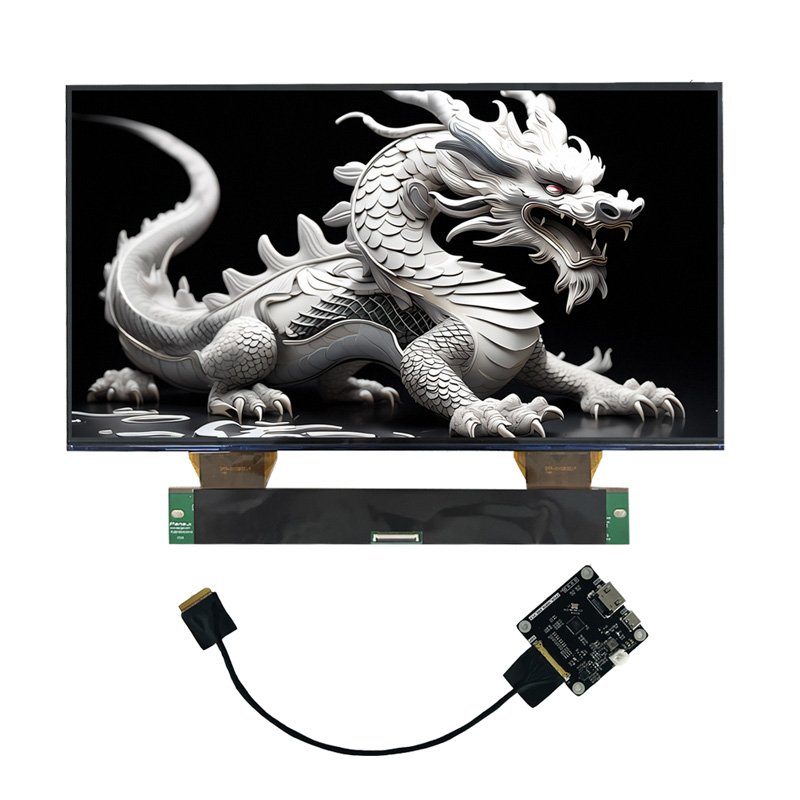
The field of additive manufacturing is entering a new era of precision and detail, thanks to advances in display technology. Among the emerging innovations, the 16-inch 8K mono LCD is becoming a key component in high-resolution 3D printers.
These displays provide an unprecedented combination of large screen area and ultra-high pixel density, allowing resin-based 3D printers to achieve finer layer definition and smoother surface finishes. Industry experts note that such technology is crucial for applications where precision directly impacts functional prototypes and finished products.
Read more about the 16-inch 8K mono LCD and its role in additive manufacturing advancements.
Technical Trends in 3D Printer Displays
Recent developments highlight several key trends:
- Monochrome Panels for Faster Printing: Monochrome 8K LCDs allow more UV light to pass through during curing, reducing exposure time per layer compared to color displays.
- High Pixel Density for Fine Features: With 7680×4320 resolution, these displays can accurately reproduce intricate geometries, essential for miniature models or complex prototypes.
- Larger Build Areas: A 16-inch panel balances resolution with workspace, enabling users to print larger objects without sacrificing detail.
- Improved Reliability: Uniform brightness and wide viewing angles minimize exposure inconsistencies, reducing layer defects and failed prints.
This combination of features is influencing both desktop and industrial-grade 3D printers, setting new standards for printing precision and efficiency.
Impact on Printing Workflow
The introduction of 16-inch 8K mono LCDs has practical implications for 3D printing workflows:
- Reduced Print Times: Faster curing allows for higher throughput, making production cycles more efficient.
- Enhanced Model Accuracy: Precise layer control minimizes warping and layer misalignment, ensuring that printed parts match the digital model closely.
- Surface Finish Quality: Monochrome panels reduce light scattering, resulting in smoother surfaces and cleaner details.
- Design Flexibility: Higher resolution supports the creation of complex features that were previously difficult to achieve with smaller or lower-resolution displays.
Analysts predict that these workflow improvements will continue to drive innovation in resin-based 3D printing, particularly for industries producing prototypes, jewelry, or dental models.
Adoption Across 3D Printing Applications
Although the technology is relatively new, adoption of 16-inch 8K mono LCDs is growing rapidly in professional 3D printing:
- Desktop Resin Printers: Hobbyists and small-scale manufacturers are upgrading to larger, high-resolution panels to improve print quality.
- Industrial Printers: High-resolution displays are becoming standard in production environments where precision and repeatability are critical.
- Specialized Models: Niche applications such as dental and jewelry printing benefit from the combination of large format and fine pixel resolution.
Explore applications of 16-inch 8K mono LCD in 3D printing to see examples of how professionals are leveraging these displays.
Future Outlook for 3D Printing Displays
Industry analysts highlight several trends for the near future:
- Integration with AI and Smart Slicing: Advanced slicing software can exploit the high-resolution display to optimize layer exposure and support complex geometries.
- Higher-Volume Production: Larger 8K panels may enable simultaneous printing of multiple small objects with consistent quality.
- Standardization in High-End 3D Printers: As the benefits become widely recognized, monochrome 8K displays are expected to become standard in premium desktop and industrial printers.
The combination of resolution, speed, and reliability positions 16-inch 8K mono LCDs as a transformative technology for additive manufacturing.
Conclusion
The adoption of 16-inch 8K mono LCDs marks a pivotal development in the evolution of 3D printing displays. By enabling ultra-fine resolution, faster layer curing, and reliable print accuracy, these panels are redefining the capabilities of resin-based 3D printers.
As additive manufacturing continues to expand across professional and high-precision applications, high-resolution monochrome LCDs are expected to play a central role in pushing the boundaries of design and production.
Discover the technical advantages of 16-inch 8K mono LCD for 3D printing and stay informed on the latest industry developments.