

Industrial Reliability and Long-Term Performance of the 14 inch 16K Mono LCD in Resin 3D Printing

Introduction
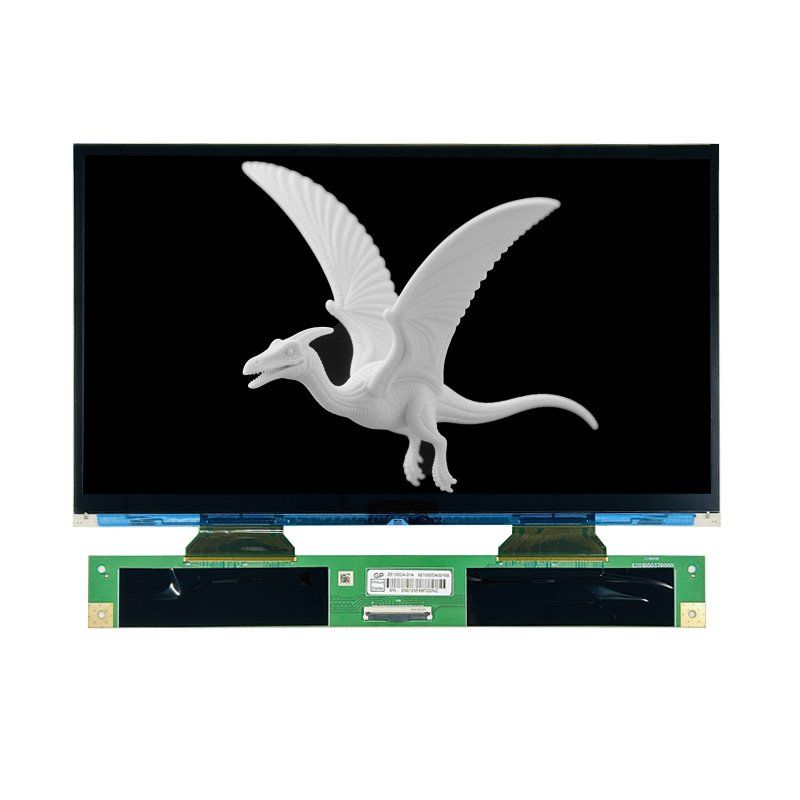
The 14 inch 16K mono LCD has become an increasingly important component in the evolution of resin-based 3D printing systems. As printers move toward larger build volumes and higher precision requirements, display reliability is no longer a secondary concern but a defining factor in overall system performance. In industrial and professional printing environments, the LCD panel must maintain consistent optical behavior, mechanical stability, and predictable aging characteristics over extended operating cycles.
Unlike consumer-focused discussions that emphasize resolution alone, industrial users are more concerned with how a display performs after thousands of hours of exposure to ultraviolet light, elevated temperatures, and continuous production workflows. In this context, the 14 inch 16K mono LCD represents a shift toward display technologies designed not only for visual clarity but also for long-term operational stability.
Reliability as a Core Requirement in Modern Resin Printing
Resin 3D printing systems rely on the LCD panel as an optical mask that directly controls the curing behavior of photopolymers. Any deviation in light transmission, pixel consistency, or panel uniformity can accumulate over time and result in print defects that are difficult to correct through software alone.
In industrial settings, printers are often operated in multi-shift production schedules, where downtime caused by display degradation can significantly affect throughput. This has driven demand for panels such as the 14 inch 16K mono LCD, which are engineered with monochrome architectures specifically to address the limitations of traditional RGB LCDs under prolonged UV exposure.
By removing color filters and optimizing the optical path, monochrome LCDs reduce internal heat buildup and improve UV transmission efficiency. These characteristics contribute directly to improved stability during long print runs and help ensure that exposure behavior remains predictable across the entire service life of the display.
Long-Term Stability Under Continuous UV Exposure
One of the most critical challenges for LCDs in resin printing is sustained exposure to high-intensity ultraviolet light. Over time, UV radiation can accelerate material aging, leading to reduced transmittance, uneven curing, or pixel degradation. This is particularly relevant for large-format, high-resolution panels, where even minor inconsistencies can become visible in printed parts.
The performance of the 14 inch 16K mono LCD is shaped by design considerations that prioritize resistance to UV-induced degradation. Monochrome panels inherently experience less optical loss compared to RGB alternatives, allowing them to operate at lower exposure times while achieving the same curing results. This reduced stress environment plays a key role in extending usable service life.
In professional printing environments, where consistency between early and late production batches is essential, such stability directly translates into reduced calibration frequency and improved process repeatability.
Thermal Behavior and Mechanical Consistency
Beyond optical performance, thermal behavior is another factor that strongly influences LCD reliability. Resin printers generate heat not only from the UV light source but also from surrounding electronics and enclosed build chambers. If a display panel exhibits uneven thermal expansion or localized hotspots, mechanical stress can lead to alignment drift or long-term structural issues.
The 14 inch 16K mono LCD is typically integrated into systems that require stable operation across varying thermal conditions. Monochrome panel designs generate less internal heat due to higher light efficiency, which helps maintain consistent pixel geometry during extended print cycles. This thermal stability is especially important for applications involving fine features or tight dimensional tolerances.
Such characteristics make this class of display suitable for professional environments where printers are expected to operate reliably without frequent manual intervention.
Impact on Print Consistency and Process Control
From a process control perspective, display reliability has a direct impact on exposure calibration and material behavior. When an LCD panel maintains stable transmission characteristics over time, exposure parameters can remain unchanged for longer periods, simplifying workflow management.
In this context, the 14 inch 16K mono LCD for resin 3D printing supports more predictable curing behavior across different resin formulations. This consistency allows operators to focus on optimizing print strategies rather than compensating for gradual hardware drift. For industrial users, such predictability is often more valuable than marginal gains in peak resolution.
By supporting uniform exposure behavior across the entire build area, high-resolution monochrome panels also help reduce edge-to-center variation in printed parts, which is a common challenge in large-format systems.
Suitability for Professional and Industrial Applications
As resin 3D printing expands into fields such as dental manufacturing, medical modeling, precision tooling, and small-batch production, the demand for reliable display components continues to grow. In these applications, the cost of print failure often exceeds the cost of the hardware itself, making reliability a central purchasing consideration.
The design of the 14 inch 16K mono LCD aligns with these requirements by emphasizing durability, consistency, and predictable aging behavior rather than short-term performance metrics. This approach reflects a broader industry trend toward components that support continuous operation and scalable production environments.
For system integrators and equipment manufacturers, selecting displays with proven long-term stability helps reduce warranty risk and improves overall system credibility in professional markets.
Industry Trends Toward High-Resolution Monochrome Panels
The adoption of 16K monochrome displays reflects a broader shift in resin 3D printing toward higher resolution combined with industrial robustness. As pixel densities increase, the margin for error decreases, placing greater emphasis on manufacturing quality and materials engineering at the display level.
The 14 inch 16K mono LCD sits at the intersection of these trends, offering a balance between fine detail capability and operational reliability. Rather than being positioned solely as a high-resolution component, it represents a response to the growing expectation that display panels must perform consistently throughout extended production lifecycles.
This evolution mirrors similar transitions in other industrial display applications, where longevity and stability increasingly outweigh purely aesthetic considerations.
Conclusion
The role of the LCD panel in resin 3D printing has evolved from a passive imaging component to a critical determinant of system reliability and print consistency. The 14 inch 16K mono LCD exemplifies this shift by addressing the long-term operational challenges associated with high-resolution, UV-based printing environments.
Through improved UV efficiency, stable thermal behavior, and predictable aging characteristics, this class of display supports the demands of professional and industrial resin printing applications. As the industry continues to push toward higher precision and greater production scalability, reliability-focused display technologies will remain a foundational element in the development of next-generation 3D printing systems.