

Key Performance Factors of Mono LCD for Industrial 3D Printers

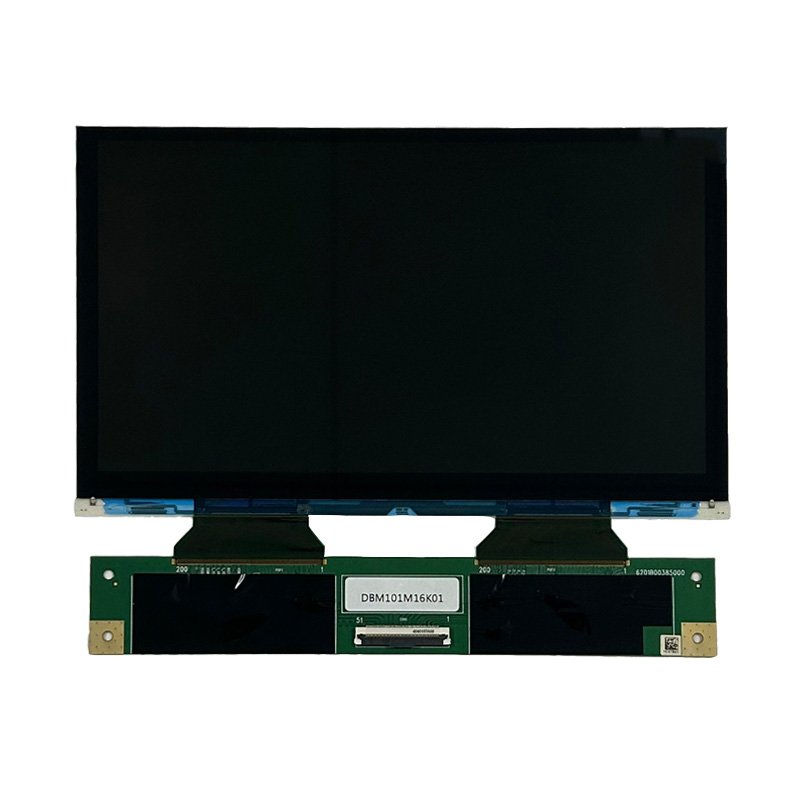
Introduction
Industrial resin 3D printing is no longer limited to prototyping. In production-level environments, printers are expected to operate continuously while maintaining stable output quality and dimensional consistency. In these systems, display performance directly affects printing reliability.
The overall performance of a mono LCD for industrial 3D printers is determined by more than just resolution. Optical efficiency, thermal stability, contrast control, and long-term durability all play critical roles in ensuring consistent results during extended industrial operation.
Optical Transmittance and Exposure Efficiency
Optical transmittance refers to how effectively UV light passes through the LCD panel during exposure. Higher transmittance allows resin layers to cure faster and more evenly, reducing exposure time while maintaining accuracy.
In industrial systems, efficient light transmission contributes to:
- Shorter layer curing cycles
- Reduced heat accumulation
- More stable exposure energy
Mono LCD panels designed specifically for industrial 3D printing are optimized for UV wavelengths, offering significantly higher transmittance than traditional color LCDs.
Thermal Stability in Continuous Printing
Industrial 3D printers often operate for long periods without interruption. During continuous operation, heat generated by UV light sources and electronic components can affect LCD performance.
Poor thermal stability may result in:
- Image deformation
- Reduced contrast
- Accelerated panel aging
High-quality mono LCD modules incorporate thermal-resistant materials and structural designs that maintain optical stability under sustained heat loads, which is essential for industrial-grade equipment.
Contrast Ratio and Image Definition
Contrast ratio determines how clearly exposure boundaries are defined between cured and uncured areas. A higher contrast ratio improves edge sharpness and minimizes light leakage between adjacent pixels.
For industrial applications, stable contrast performance ensures:
- Cleaner feature edges
- Better dimensional control
- Reduced post-processing effort
Consistent contrast behavior is especially important when printing fine structures or thin walls.
Response Time and Printing Speed
Response time refers to how quickly pixels can switch states during exposure cycles. Slow response times can cause blurred edges, particularly at high printing speeds.
Industrial mono LCD panels are engineered for fast pixel switching to support:
- High-speed printing
- Thin layer heights
- Complex geometries
This allows manufacturers to improve throughput without sacrificing accuracy.
Mechanical Integration and System Alignment
Display performance must be considered together with mechanical integration. Even a high-quality mono LCD can underperform if optical alignment is inaccurate.
Proper alignment helps prevent:
- Uneven exposure across the build platform
- Geometric distortion
- Edge inconsistencies
Industrial printer designers must consider display specifications and integration precision as part of a unified system.
Long-Term Reliability and UV Resistance
Over time, prolonged UV exposure gradually degrades LCD materials. Industrial-grade mono LCD panels are designed with enhanced resistance to UV aging, ensuring stable performance throughout their service life.
Reliable displays reduce:
- Maintenance frequency
- Unexpected downtime
- Replacement costs
This makes display selection a strategic decision for industrial manufacturers.
Industrial Application Considerations
Different industrial applications emphasize different performance factors. For example:
- Precision tooling prioritizes contrast and accuracy
- Production manufacturing values thermal stability and lifespan
Understanding these priorities helps engineers select the most suitable mono LCD for industrial 3D printers.
Reference to Industrial-Grade Solution
For systems requiring stable performance, high optical efficiency, and long-term reliability, solutions such as
👉 high-resolution mono LCD for industrial 3D printers
provide a dependable foundation for professional-grade equipment.
Conclusion
The performance of industrial 3D printers depends on multiple interconnected factors. While resolution is important, optical transmittance, thermal stability, contrast control, and durability ultimately define long-term success.
Selecting the right mono LCD for industrial 3D printers enables consistent output quality, higher production efficiency, and reduced operational risk.