

Mono LCD vs DLP Projector for Industrial 3D Printers: A Technical Comparison

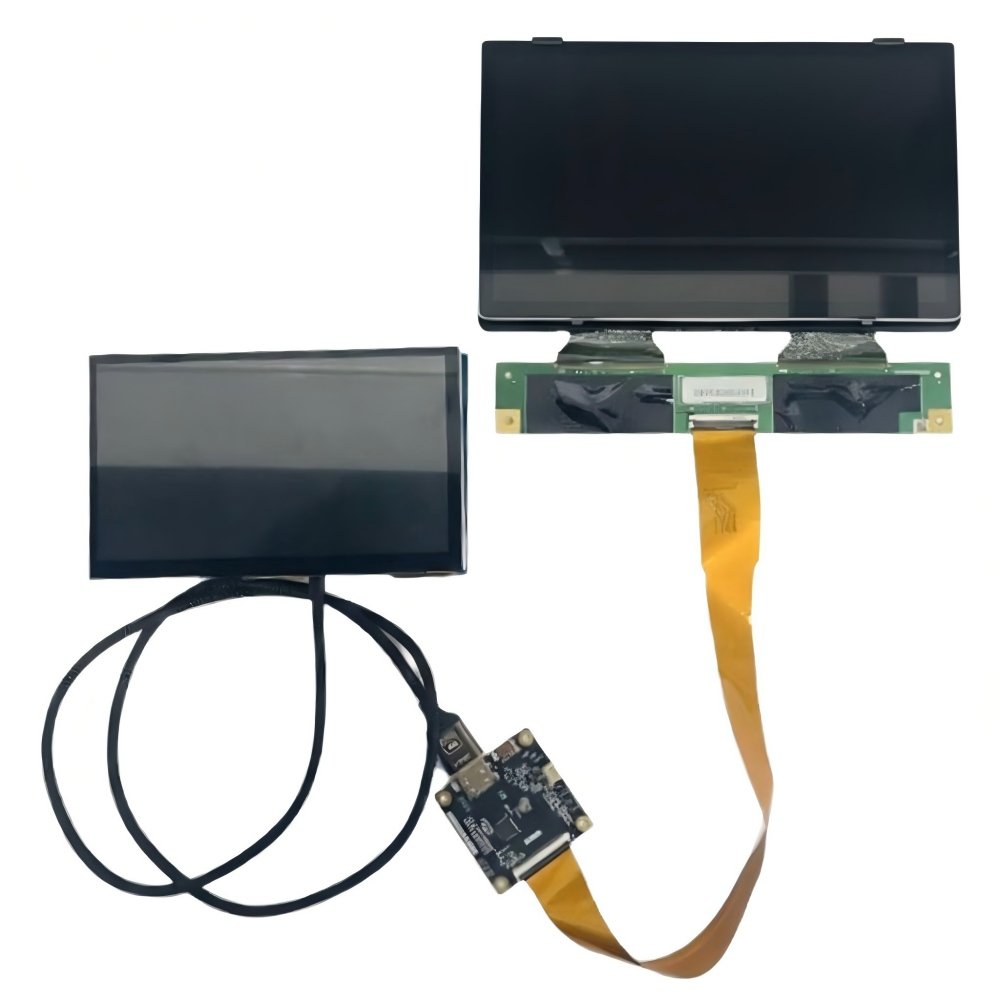
Mono LCD vs DLP Projector for Industrial 3D Printers: A Technical Comparison
Industrial resin 3D printing has matured into a production-grade manufacturing process, widely used in tooling, medical modeling, dental applications, and precision engineering. As system requirements grow more demanding, display technology has become a critical factor in determining print quality, productivity, and long-term stability.
When evaluating a mono LCD for industrial 3D printers, it is increasingly common to compare this technology with DLP projector-based systems. Both approaches are capable of delivering high-precision resin printing, yet they differ significantly in architecture, scalability, and cost structure. Understanding these differences is essential for engineers and system designers selecting the most appropriate solution for industrial applications.
How Mono LCD and DLP Technologies Work
At a fundamental level, mono LCD and DLP projector systems serve the same purpose: they act as spatial light modulators that define which areas of resin are cured during each exposure cycle.
A mono LCD functions as a digital photomask, selectively allowing UV light to pass through specific pixels. Because mono LCD panels do not use color filters, they achieve high light transmittance and enable faster exposure times.
DLP projectors, on the other hand, rely on a digital micromirror device (DMD) composed of thousands or millions of tiny mirrors. Each mirror directs light toward or away from the resin surface, creating the projected image.
Both technologies are widely used in industrial resin 3D printing, but their operational characteristics differ in important ways.
Resolution and Image Uniformity
Resolution is often one of the first specifications considered when comparing mono LCD and DLP systems. In mono LCD-based printers, resolution is directly defined by the physical pixel grid of the display panel. This makes resolution scaling relatively straightforward, especially with the availability of 8K and 16K panels.
DLP systems define resolution based on the DMD chip and projection optics. While DLP can deliver excellent pixel accuracy, resolution is typically fixed by the projector design and becomes more complex to scale for larger build areas.
In large-format industrial printers, maintaining uniform resolution across the entire build surface is often easier to achieve with a high resolution mono LCD, particularly when paired with a well-aligned optical system.
Scalability for Industrial Build Volumes
Scalability is a key concern in industrial environments where productivity and batch manufacturing are priorities. Mono LCD systems scale naturally with panel size, allowing manufacturers to increase build volume without dramatically increasing system complexity.
DLP systems, by contrast, may require additional optical components or multiple projectors to cover larger build areas. This can introduce alignment challenges and increase system cost.
For industrial resin 3D printing applications that demand both precision and scalability, mono LCD technology often provides a more flexible path forward.
Exposure Speed and Production Efficiency
Both mono LCD and DLP technologies are capable of fast exposure times, but they achieve this in different ways. Mono LCD panels benefit from high UV transmittance, enabling shorter exposure cycles even at high resolutions.
DLP projectors can deliver high-intensity light, but exposure speed may vary depending on optical efficiency, projector brightness, and system calibration.
In continuous industrial operation, consistent exposure speed combined with predictable performance is critical. This is one reason why many manufacturers favor mono LCD-based systems for high-throughput production environments.
Optical Complexity and System Integration
From a system integration perspective, mono LCD solutions are generally simpler to implement. The optical path typically consists of a UV light source, collimation optics, and the LCD panel itself.
DLP systems require more complex optical assemblies, including projection lenses and precise alignment mechanisms. While these systems can achieve excellent results, they may introduce additional points of failure in long-term industrial use.
Simpler optical architectures can contribute to improved reliability and easier maintenance, both of which are highly valued in industrial settings.
Cost Structure and Maintenance Considerations
Cost considerations extend beyond initial system pricing. In industrial applications, total cost of ownership includes maintenance, component replacement, and downtime.
Mono LCD panels are modular components that can be replaced relatively easily when required. Advances in panel durability have also improved lifespan under continuous UV exposure.
DLP systems often involve higher upfront costs and more specialized components. While DLP projectors can offer long operational lifetimes, maintenance and replacement costs may be higher depending on system design.
When evaluating mono LCD for industrial 3D printers, cost predictability and serviceability are important factors influencing long-term operational decisions.
Application Scenarios: When Each Technology Excels
Both technologies have strengths depending on the application.
Mono LCD-based systems are particularly well suited for:
- Large-format industrial printers
- High-resolution batch production
- Applications requiring scalable build volumes
DLP-based systems may excel in:
- Smaller build volumes
- Applications requiring very high optical precision
- Specialized industrial workflows
In many production-focused environments, mono LCD technology offers a balanced combination of performance, scalability, and cost efficiency.
Industrial System Perspective
From an industrial system design standpoint, the choice between mono LCD and DLP is rarely about which technology is “better” in absolute terms. Instead, it is about selecting the technology that aligns best with production requirements, reliability expectations, and long-term scalability.
Manufacturers developing industrial resin 3D printing platforms often evaluate mono LCD solutions as part of a broader display and optical strategy. For companies seeking integrated expertise in industrial display technologies, working with providers offering industrial 3D printing display solutions—such as those presented on
https://duobond-solutions.com/
can support system-level optimization rather than isolated component selection.
Final Comparison Summary
When comparing mono LCD and DLP projector technologies for industrial resin 3D printing, several conclusions emerge:
- Mono LCD systems scale more easily for large build areas
- DLP systems offer precise optical control in compact formats
- Mono LCD architectures are typically simpler to integrate
- Cost and maintenance considerations favor modular LCD solutions
As industrial 3D printing continues to evolve, both technologies will remain relevant. However, the growing availability of ultra-high-resolution mono LCD panels has made this approach increasingly attractive for production-oriented industrial printers.
Conclusion
Selecting between mono LCD and DLP projector systems requires a clear understanding of application requirements and system constraints. For many manufacturers, evaluating a mono LCD for industrial 3D printers within the context of scalability, reliability, and total cost of ownership leads to more sustainable long-term solutions.
By approaching display selection from a system-level perspective, industrial 3D printing platforms can achieve consistent performance, improved productivity, and greater design flexibility.