

Mono LCD vs DLP: Which Technology Fits Industrial 3D Printing Better?

Introduction
Resin-based 3D printing technologies have evolved rapidly, with mono LCD and DLP emerging as two dominant approaches. While both are capable of producing high-detail parts, their suitability for industrial environments differs significantly.
Understanding the differences between mono LCD for industrial 3D printers and DLP systems helps manufacturers evaluate scalability, consistency, and long-term cost efficiency.
How Mono LCD and DLP Technologies Work
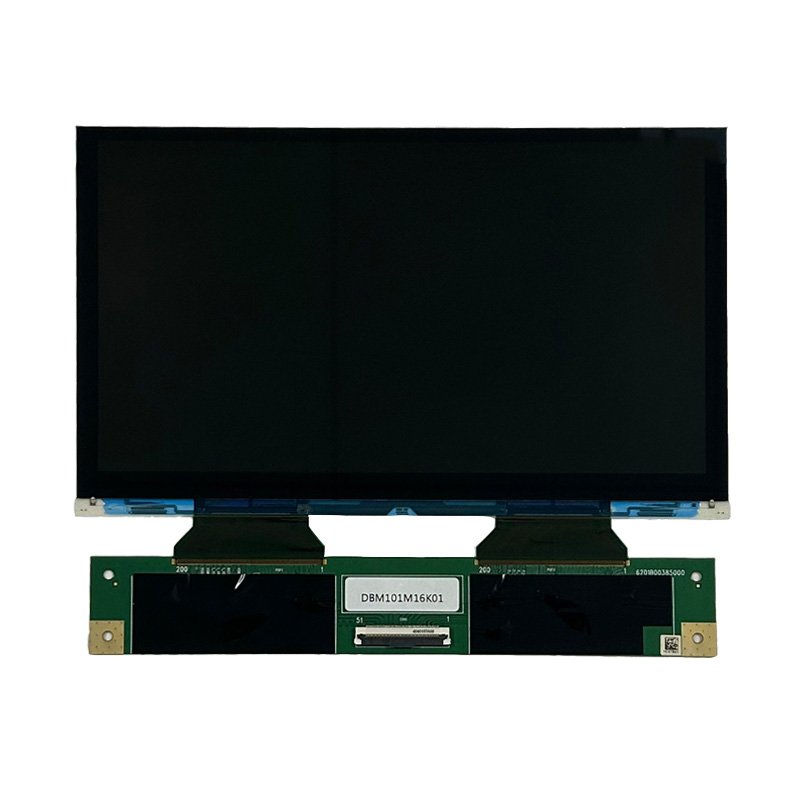
Mono LCD systems use a high-resolution display panel to selectively block or transmit UV light across the entire build area. Each layer is exposed simultaneously, ensuring uniform curing.
DLP systems use a digital micromirror device (DMD) to project an image through an optical lens. While precise, this projection-based approach introduces different scalability and maintenance considerations.
Resolution and Scalability
One of the primary advantages of mono LCD technology is scalability. Resolution can increase with display size, allowing large-format printers to maintain high detail levels.
In contrast, DLP resolution is limited by the projector chip. Scaling up the build area often requires optical compromises or multiple projection systems.
For industrial expansion, mono LCD for industrial 3D printers offers greater flexibility.
Exposure Uniformity and Consistency
Mono LCD systems expose the entire layer simultaneously, resulting in uniform light distribution across the build platform.
DLP systems may experience brightness variation due to projection geometry, especially in larger machines. Exposure non-uniformity can lead to dimensional inconsistencies and increased calibration effort.
Uniform exposure improves reliability in production environments.
Cost and Maintenance Considerations
From a cost perspective, mono LCD systems generally offer:
- Lower initial system cost
- Easier component replacement
- Simpler maintenance procedures
DLP systems often involve higher upfront investment and more complex optical components, increasing total cost of ownership.
Production Efficiency and Throughput
Mono LCD systems can achieve higher throughput due to simultaneous layer exposure and fast refresh cycles. This makes them well-suited for batch production and large build volumes.
DLP systems may offer excellent precision for small builds but can be less efficient for large-scale production.
Industrial Application Suitability
DLP technology may be appropriate for applications requiring extreme precision on small parts. However, for industrial environments focused on scalability, consistency, and cost efficiency, mono LCD technology is often the preferred solution.
Reference to Industrial Mono LCD Solution
For manufacturers seeking scalable and high-resolution display solutions,
👉 industrial mono LCD for 3D printing systems
offer a practical alternative to projection-based architectures.
Conclusion
Both mono LCD and DLP technologies have their strengths, but their suitability depends on industrial priorities. In applications where scalability, uniformity, and operational efficiency matter most, mono LCD for industrial 3D printers continues to gain widespread adoption.