

UV Curing System for 3D Printing: Performance Optimization and Industrial Integration

Introduction: UV Curing System for 3D Printing in Industrial Production
The UV curing system for 3D printing has become a foundational component in modern photopolymer additive manufacturing. As SLA and DLP technologies mature beyond prototyping and move into industrial production, curing system architecture is undergoing rapid refinement. Performance stability, thermal management efficiency, and integration flexibility are increasingly prioritized alongside optical precision.
In high-throughput environments, curing consistency directly influences layer adhesion, mechanical properties, and final surface quality. Rather than functioning as a simple illumination device, the UV curing system now represents an engineered subsystem that integrates optics, electronics, cooling mechanics, and digital control algorithms.
This article explores how industrial UV curing systems are evolving within professional 3D printing environments, with particular focus on performance optimization and integration strategy.
From Illumination to Controlled Energy Delivery
Early resin-based 3D printers relied on relatively simple UV emission mechanisms. However, industrial scaling has exposed the limitations of basic light delivery designs. Modern curing systems must deliver:
- Controlled irradiance uniformity
- Stable wavelength targeting
- Minimal thermal drift
- Long operational lifespan
A curing system’s effectiveness depends on its ability to maintain predictable photon energy output across extended print cycles. Variability in UV intensity can result in:
- Inconsistent layer bonding
- Dimensional deviation
- Material brittleness
- Increased post-processing requirements
Advanced solutions now integrate engineered modules such as the industrial UV curing module for resin printing systems which are designed to operate under continuous industrial conditions while maintaining output stability.
Thermal Management as a Core Engineering Focus
As UV curing systems scale in output power, thermal accumulation becomes a central concern. Excessive heat affects:
- LED lifespan
- Optical alignment stability
- Emission wavelength drift
- Resin curing consistency
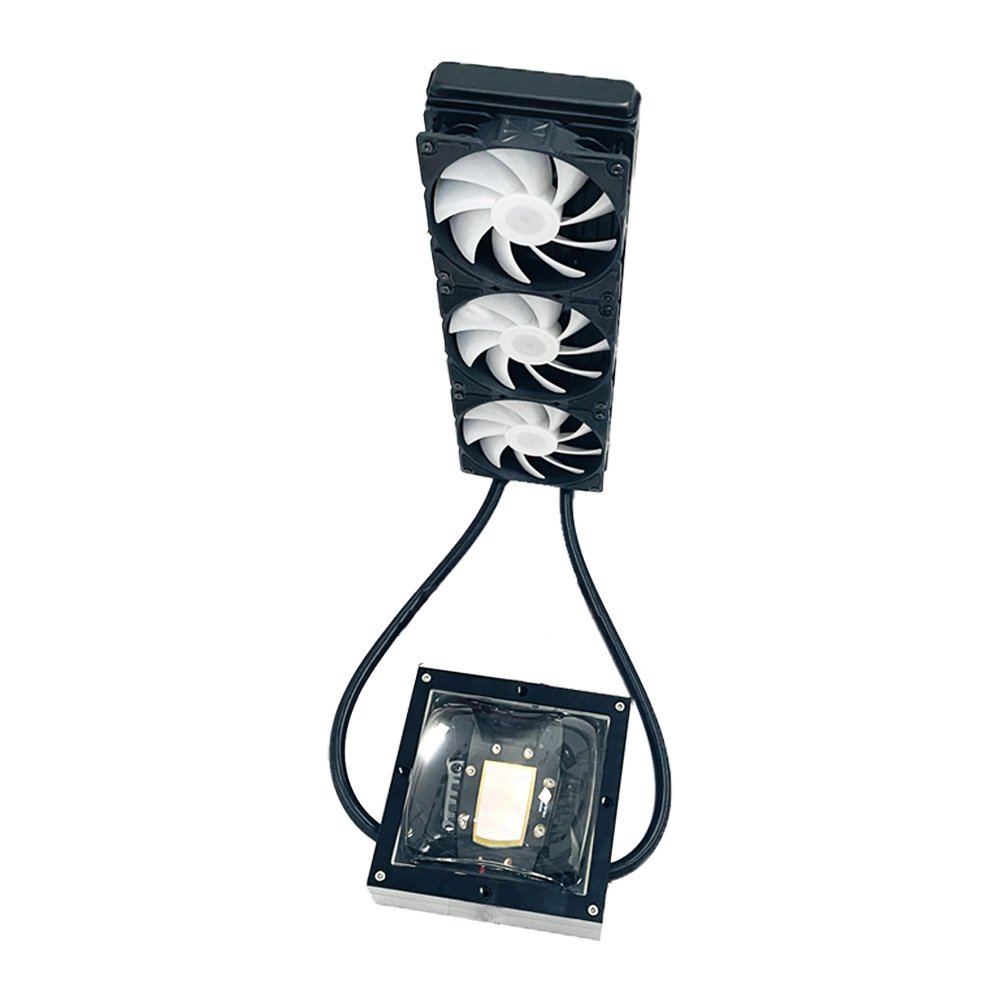
To mitigate these issues, manufacturers increasingly adopt water-cooled or hybrid cooling architectures. Liquid cooling allows higher sustained output without overheating sensitive emitter arrays.
Water-cooled UV assemblies help:
- Stabilize emitter temperature
- Prevent localized thermal hotspots
- Maintain consistent irradiance distribution
- Extend component lifespan
An example of a high-output system optimized for heat dissipation is the water-cooled UV curing solution for industrial 3D printers which demonstrates how cooling architecture can support continuous manufacturing workflows.
Thermal management has shifted from secondary consideration to primary engineering constraint within industrial photopolymerization systems.
Optical Uniformity and Large-Area Curing
As print volumes increase, uniform exposure across larger build platforms becomes critical. Uneven energy distribution can create weak zones or over-cured regions.
Modern UV curing systems address this through:
- Optimized LED array spacing
- Precision lens collimation
- Reflective cavity engineering
- Diffuser layer calibration
Large-format printers require consistent energy delivery across the entire build area. Industrial-grade curing systems often undergo optical simulation modeling to minimize edge falloff and maintain irradiance consistency within tight tolerances.
Uniform exposure ensures:
- Predictable mechanical strength
- Dimensional accuracy
- Reduced internal stress formation
- Stable resin cross-linking depth
These factors become increasingly important in aerospace, dental, and medical device manufacturing contexts.
Integration with Digital Process Control
Industrial 3D printing platforms increasingly rely on integrated monitoring systems that track environmental and operational variables.
Modern UV curing systems may interface with:
- Closed-loop intensity monitoring
- Real-time temperature sensors
- Firmware-controlled exposure profiles
- Layer-specific curing adjustments
Digital integration allows adaptive curing strategies tailored to:
- Resin viscosity
- Layer thickness
- Ambient temperature
- Print speed
This approach enhances repeatability and reduces variability between production batches.
A scalable UV curing component for SLA and DLP equipmentmust therefore support not only stable optical performance but also compatibility with digital control ecosystems.
Material Compatibility and Wavelength Precision
Photopolymer resins contain photoinitiators sensitive to specific wavelength bands, commonly in the UVA range. Precision targeting of these wavelengths enhances polymerization efficiency while reducing unnecessary heat generation.
Wavelength mismatches can lead to:
- Incomplete curing
- Residual tackiness
- Reduced tensile strength
- Increased shrinkage
Advanced UV curing systems are engineered with emission peaks tuned to match widely used resin chemistries. As new resin formulations emerge, curing systems must maintain adaptability to ensure compatibility across evolving material platforms.
Operational Durability in Continuous Manufacturing
Industrial 3D printers may operate around the clock. This continuous duty cycle places significant demands on curing subsystems.
Durability considerations include:
- LED degradation curves
- Thermal cycling resistance
- Mechanical vibration tolerance
- Optical alignment retention
Industrial-grade UV curing systems are evaluated under accelerated aging tests to simulate long-term usage patterns. Predictable performance decay allows manufacturers to schedule maintenance proactively rather than reactively.
Operational predictability reduces downtime and increases production planning reliability.
Safety and Compliance Considerations
UV radiation requires careful containment to ensure operator safety. Industrial curing systems are typically enclosed within shielded housings equipped with:
- Interlock switches
- Light-blocking barriers
- Safety monitoring sensors
Compliance with international electrical and photobiological safety standards is essential for equipment deployed in regulated manufacturing environments.
Safety architecture must be integrated into system design from the outset rather than treated as an add-on component.
Emerging Trends in UV Curing Technology
Looking forward, several innovations are shaping the future of UV curing systems in additive manufacturing:
Higher Energy Efficiency
Improved LED chip design increases photon conversion efficiency while lowering power consumption.
Dynamic Intensity Modulation
Adaptive intensity control enables selective curing strategies based on part geometry complexity.
Integrated Cooling Intelligence
Smart thermal management systems adjust cooling rates dynamically to maintain stable emitter temperature.
Expanded Build Area Compatibility
Scalable curing arrays support larger industrial printers without compromising uniformity.
As additive manufacturing shifts further into functional production, curing system reliability will remain a central performance determinant.
Conclusion
The UV curing system for 3D printing has evolved into a sophisticated engineering subsystem integral to industrial photopolymer manufacturing. Beyond light emission, modern curing systems must address thermal stability, optical uniformity, digital integration, and long-term durability.
As production-scale additive manufacturing continues to expand across aerospace, healthcare, and consumer industries, optimized curing architectures will play a decisive role in determining throughput, quality consistency, and operational efficiency.
The trajectory of innovation suggests continued refinement of cooling strategies, wavelength precision, and smart integration—ensuring that UV curing technology remains central to the future of industrial 3D printing.