

Why 16K Mono LCD Has Become a Standard Display Technology in Resin 3D Printing

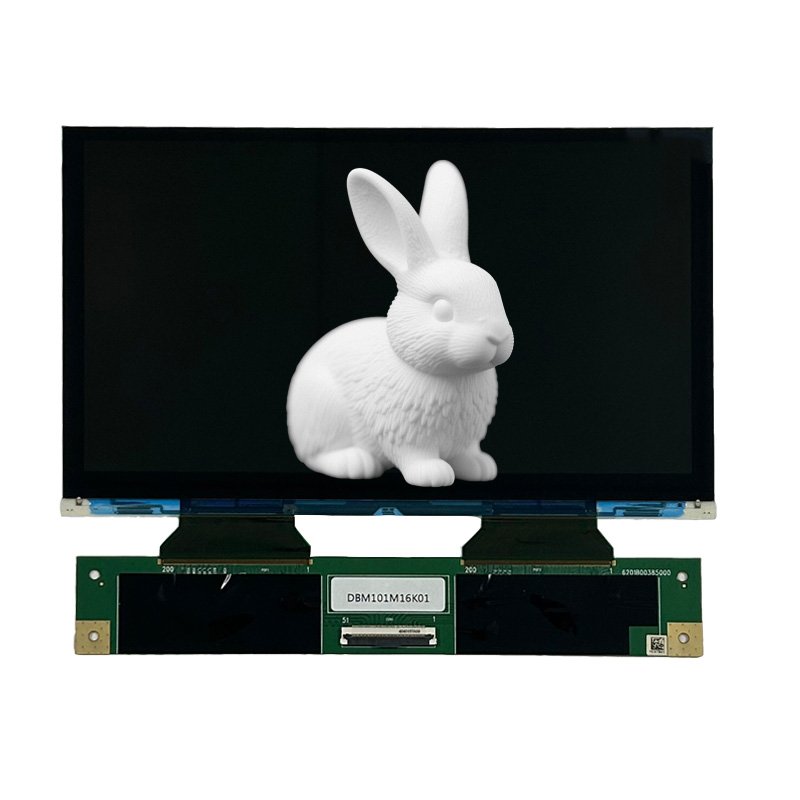
Why 10.1-Inch 16K Mono LCD Screens Are Becoming Mainstream in 3D Printing Displays
The landscape of resin 3D printing technology continues to evolve rapidly, driven by a relentless demand for higher precision, greater efficiency, and more robust printing capabilities. Among the many components that influence print quality and system performance, the display panel plays a pivotal yet often underappreciated role. In recent years, 16K mono LCD screens have emerged as the new standard in high-resolution resin printers, especially for professional and industrial applications. This trend is reshaping expectations for precision, throughput, and application flexibility in the broader 3D printing ecosystem.
In this article, we explore why 16K resolution panels are gaining traction, how they compare to previous display technologies, and what market forces are driving their adoption. We also contextualize these developments against the broader backdrop of output quality demands across key verticals—from medical and dental fabrication to miniature design and industrial prototyping.
G – Goal: Understanding the Rise of 16K Mono LCD in Modern 3D Printing
The primary goal of this discussion is to unpack the technical and market factors that are accelerating the shift toward ultra-high-resolution display solutions in resin-based 3D printing. Specifically, we seek to answer:
- What is the role of display resolution in 3D printing quality?
- Why do mono LCD technologies outperform older RGB panels?
- What distinct advantages does 16K resolution offer over lower resolutions?
- Which segments of the printing market benefit most from this transition?
To address these questions, we begin with the basic mechanics of LCD technology in resin printing and move toward a broader analysis of industry demand and competitive pressures.
The Technical Foundation: Why Display Matters in 3D Printing
At the core of resin-based 3D printing, especially in SLA, MSLA, and other UV-curing technologies, is a process that relies on precise, layer-by-layer exposure of photopolymer resins to UV light. The display panel serves as a mask that selectively transmits UV light to cure specific regions of each layer. Consequently, the display’s resolution and light transmission characteristics directly shape the fidelity, speed, and reliability of the entire print process.
Historically, many early resin printers used RGB LCD panels adapted from consumer electronics. These panels contain color filters, which are unnecessary for monochrome image duties and significantly reduce the amount of useful UV light transmitted through the screen. As a result, exposure times per layer were longer, operational lifespans were shorter, and the cumulative throughput was limited.
This limitation catalyzed the shift toward mono LCD technology, which removes the color filters entirely. By eliminating color filters, monochrome displays allow far greater UV transmission—dramatically shortening exposure times and increasing throughput while enhancing the longevity of the panel itself. duobond-solutions.com
E – Experience: The Evolution Toward 16K Resolution
The first wave of mono LCD adoption in desktop and industrial resin 3D printers coincided with resolutions in the 4K and 8K ranges, offering marked improvements over RGB screens. However, as users and manufacturers alike began to demand ever-higher fidelity and surface smoothness, the industry quickly pushed to even higher resolutions.
This is where 16K mono LCD panels—exemplified by the 10.1-inch 15120 × 6230 panel described here—come into focus. These ultra-high-resolution screens provide an extraordinary pixel density on a compact footprint, enabling printers to produce exceptionally fine surface details and sharply defined edges that were previously unattainable at similar build volumes. Such precision matters not just for visible aesthetics, but also for functional accuracy in demanding applications such as dental models, jewelry prototypes, and complex engineering parts. duobond-solutions.com
For a concrete example of this technology in practice, consider the 10.1-inch 16K mono LCD display showcased here: 10.1-inch 16K MIPI 15120×6230 mono LCD screen.
The Practical Advantages of 16K Mono LCD Screens
1. Ultra-Fine Detail and Surface Quality
At its core, increasing resolution enhances the smallest resolvable features in a printed object. For precision-dependent industries like dental and jewelry fabrication, where micro-details affect fit and finish, the difference between 8K and 16K outputs is significant. The finer pixel matrix allows smoother curves, reduced stair-stepping effects, and noticeably less post-processing.
2. Improved Print Speeds and Efficiency
Thanks to the higher UV transmittance of mono LCD panels, exposure times per layer can be significantly reduced compared to RGB panels. This effect is compounded at 16K resolutions, where finer light definition allows more efficient curing. As resin printers become capable of processing more layers per hour, overall throughput improves—making high-resolution printing more viable for production workflows.
3. Higher Lifespan and Lower Maintenance
Monochrome panels are engineered for frequent UV exposure, with most models rated for multiple times the lifespan of RGB units. This durability matters in professional settings where printers operate continuously, reducing downtime and lowering total cost of ownership.
4. Versatility Across Use Cases
Although desktop hobbyists were early adopters of mono LCD screens, the transition to 16K resolution aligns with broader market demands. Dental prosthetics, medical modeling, industrial prototyping, and even consumer electronics design increasingly rely on ultra-high-resolution printing to meet design tolerances and functional requirements.
These benefits are not hypothetical. Many resin printers on the market now incorporate 16K mono displays as flagship features, such as the widely discussed 10.1″ mono display used in several next-generation machines.
Market Dynamics Driving Adoption
Several key market trends are converging to make high-resolution displays mainstream in resin 3D printing:
Escalating Quality Expectations
End users across industries are demanding results previously achievable only with more expensive or slower technologies. As resolution becomes a competitive differentiator, manufacturers are prioritizing high-pixel-density displays to stay ahead.
Cost Declines in High-Resolution Panels
While ultra-high-resolution technology once carried a premium cost, economies of scale and manufacturing advances have steadily lowered the barrier to adoption. This, in turn, encourages more printer makers to incorporate 16K panels into mid-range models.
Broader Application Requirements
From functional prototyping to final-use part production, diverse verticals are recognizing the advantages of detailed resin prints. These use cases often demand uniform light distribution and precise pixel control—all traits inherent to mono LCD technologies.
Choosing the Right Display Partner
For manufacturers seeking robust supply chains and technical support, working with an experienced mono LCD supplier is crucial. A reliable partner can provide not just panels, but also guidance on system integration, interface compatibility, and long-term supply stability. In this context, Duobond Solutions has established itself as a specialist provider of advanced 3D printer display solutions and broader component expertise.
Learn more about the company’s capabilities and industry experience: Duobond Solutions company introduction.
O – Outcome: What the 16K Mono LCD Trend Means for the Future
The continued shift toward 16K mono LCD technology marks a significant evolution in 3D printing hardware. It reflects not only technological progress and improvements in manufacturing economics but also an alignment of supply capabilities with increasingly exacting user requirements.
For equipment manufacturers, this evolution enables differentiation through performance rather than mere marketing claims. For end users, it translates to higher quality, faster turnaround times, and broader application possibilities—from concept models to production-ready parts.
In summary, the rise of 16K mono displays in the resin printing market is both a response to and a driver of higher performance standards across the industry. As the technology continues to mature and proliferate, its influence on design expectations and manufacturing processes will only grow stronger.